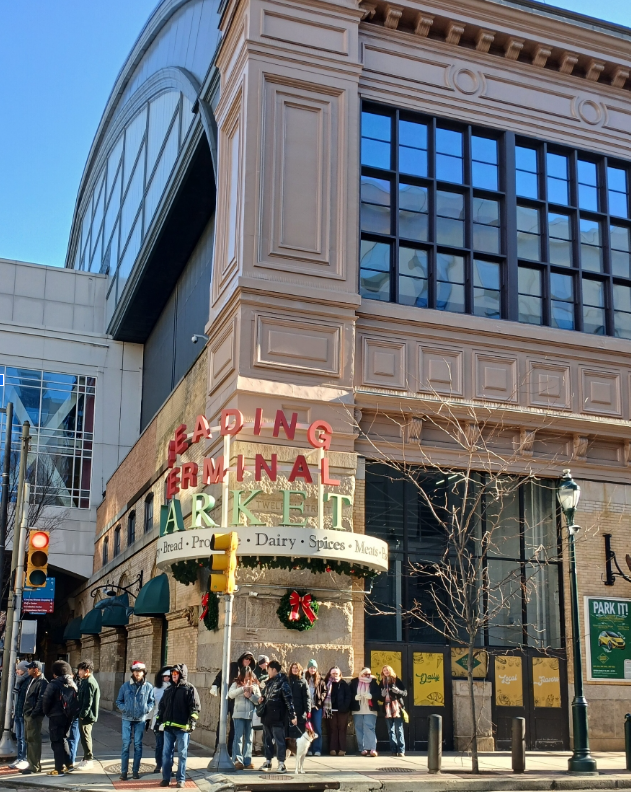
For more than a century, Reading Terminal Market has been at the heart of Philadelphia’s food scene, serving as a place for history, culture, and community to come together. Public markets have been part of Philadelphia since William Penn‘s time in the late 1600s, when farmers and merchants gathered along what became Market Street to sell their goods. As the city grew, so did these markets, eventually stretching for blocks and becoming central to daily life. However, in the mid 1800s, outdoor markets were considered crowded and unhealthy, leading the city to shut them down and move markets indoors.
The roots of today’s Redding terminal market trace back to the farmers and Franklin market at 12th and Market Street. In 1893, after the Philadelphia and Reading railroad company built a new terminal, an agreement was made to construct a market beneath the train shed. On February 22, 1893, Reading Terminal Market officially opened, designed in a grid pattern similar to Philadelphia streets. The market quickly became a booming center of commerce, housing hundreds of merchants and farmers. Its advanced cold storage facilities and convenient rail access made it one of the most efficient food markets in the country.
Throughout difficult times in American history, the market proved its importance. During the Great Depression, it thrived as local farmers brought goods directly to the city. In World War II, even with rationing and shortages, nearly all stalls remained occupied, offering Philadelphians access to food when it was hard to find elsewhere. However, changes after World War II, including suburbanization, declining railroad use, and rising maintenance costs, led to a period of decline. By the 1970s, the market was struggling, with few merchants and deteriorating conditions.
A major turnaround began in the 1980s and 1990s when renewed investment and preservation efforts restored the market. The Philadelphia Convention Center Authority purchased the market in 1990, secured funding for renovations, and worked with merchants to protect its historic character. Today, Reading Terminal Market is one of the most successful public markets in the nation, home to more than 80 independent businesses offering everything from fresh produce and meats to international cuisine and baked goods.
Local residents say the market’s appeal goes beyond food. Philadelphia resident Ben Hatcher recalls a childhood memory of piling food onto a platter, only to learn prices were based on weight. “It’s a mini mall of food with better selections than most other restaurants,“ he said. Another resident, James Hatcher, remembers street performers singing outside the market, drawing crowds and creating a lively atmosphere. Both agreed that Reading Terminal Market is for locals and tourists alike, bringing people together through its wide range of food and cultures.
Today, nearly 100,000 people visit Reading Terminal Market each week. Whether someone is stopping by for an Amish baked good, a cheesesteak, or produce from a local vendor, the market remains what it has always been: a place where Philadelphia’s history, diversity, and community spirit are all under one roof.