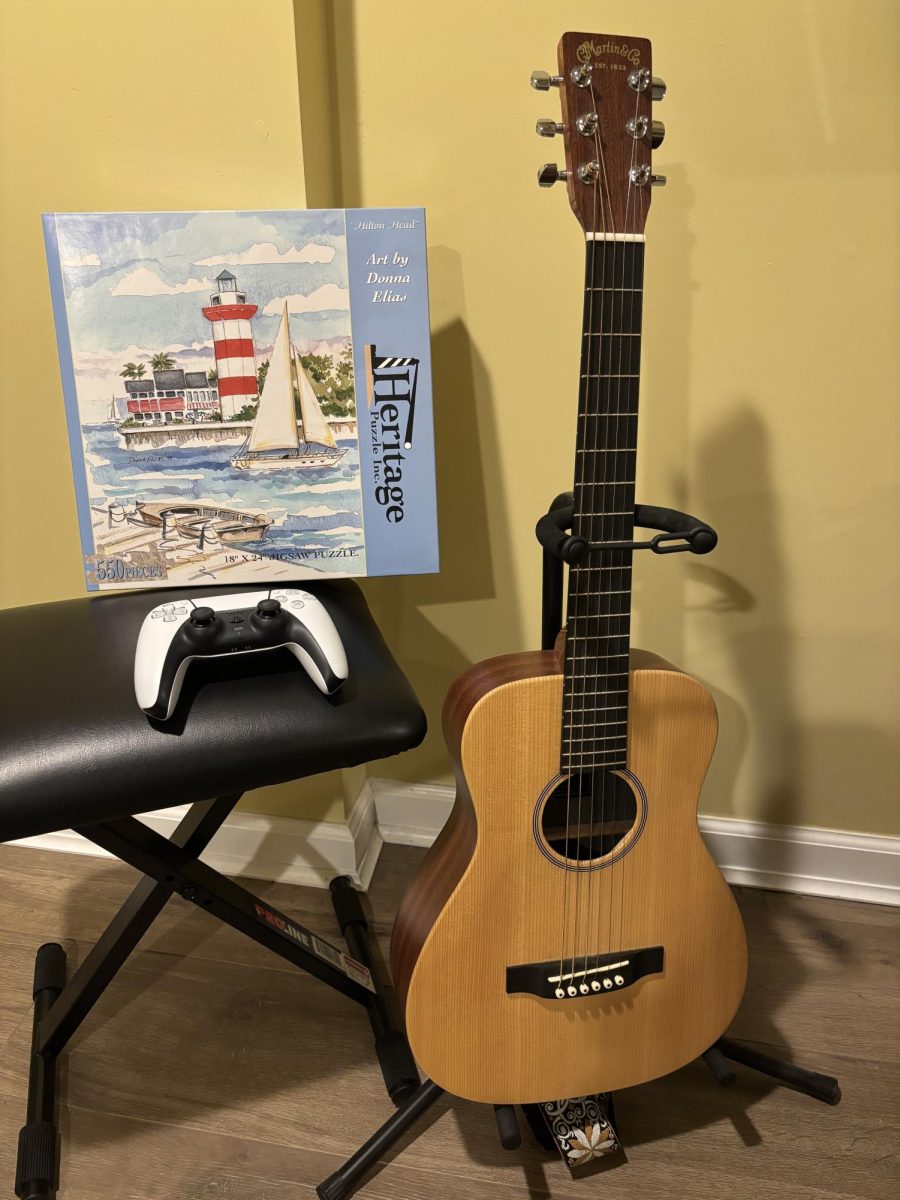
A guitar pick in one hand and a tow rope in the other may seem worlds apart, but both represent the challenge and reward of learning something new. From music lessons to water sports, hobbies can provide much more than entertainment; they can improve mental health, increase happiness and quality of life, and build confidence at any age. While children often learn new skills more quickly, it is never too late for adults to step out of their comfort zone and try something new.
In a 2023 observational study published by Nature Medicine, researchers examined more than 93,000 adults over the age of 65 across 16 countries. Participants who regularly engaged in hobbies reported better overall health, greater happiness, fewer depressive symptoms, and higher life satisfaction than those who did not. Researchers say that hobbies such as arts and crafts, sports, gardening, volunteering, and clubs provide creativity, relaxation, cognitive stimulation, and social connection, all of which contribute to emotional well-being. Learning a new hobby can also activate different parts of the brain, helping people feel more creative, relaxed, and mentally refreshed.
Children are often able to pick up new hobbies more quickly because their brains adapt to learning faster than adults. A study led by researchers at Brown University found that differences involving the neurotransmitter GABA help children process and stabilize new information more efficiently. Researchers discovered that children can retain new skills more quickly, while adults often need more time for learning to settle and develop fully. Although adults may face a slower learning process, persistence, patience, and regular practice can still lead to success when learning a new hobby.
Robert Kirkner, an 8-year-old boy, recently decided to try becoming a YouTuber by playing games. While actually making the videos was challenging for him, he kept on going because he genuinely enjoys it. Kirkner explained that creating content has made him “more confident to talk to other kids” and has given him new things to talk about with his friends. He says that picking up this new hobby “combines my favorite things” and “makes me happier.”
For adults, learning a new hobby can require more patience and persistence, especially when balancing responsibilities, physical limitations, or fear of failure. ArchWell Health recommends starting with activities that genuinely interest you and focusing on one hobby at a time to avoid becoming overwhelmed. Setting realistic goals, practicing consistently, and involving friends or groups can also help people stay motivated. Danielle Wayne, a millennial therapist, says many beginners lose interest once the initial rush of excitement of starting something new fades, especially when progress feels slow or difficult. Approaching hobbies with a growth mindset and allowing room for mistakes can make it easier to stay committed and continue improving over time.
John Good, a 55-year-old man, recently took up golfing after his friends encouraged him to give it a try. Although he admitted that finding time to play and practice can be difficult while balancing work responsibilities, he still finds time to play on days off or when he gets off work early. Just like Kirkner, Good said, golfing “has made me happier.” It allows him to relax and spend time with friends. Through this hobby, he said, “I made a few new friends and got closer with old friends.” While Good believes this skill may have been easier to start when he was younger, he still thinks it’s fun to try new things at this point in his life as well.
ArchWell Health also emphasizes that hobbies can be adapted for different abilities and stages of life, rather than abandoned completely. For instance, high-impact sports can often be modified into lower-impact versions, while supportive equipment and technology can make hobbies more accessible for older adults. ArchWell Health encourages older adults to continue exploring new activities, stating, “It’s never too late to pursue something new – you can enjoy meaningful hobbies well into your 80s and 90s!” Whether through learning the guitar, water sports, or another activity entirely, hobbies continue to prove that learning and personal growth have no age limit.
Sources:
https://archwellhealth.com/blogs/how-to-start-a-new-hobby-or-adapt-an-old-one/
https://www.health.harvard.edu/mind-and-mood/having-a-hobby-tied-to-happiness-and-well-being
https://medium.com/@tessakoller/how-an-exciting-new-hobby-can-boost-your-mental-health-610d036e2a98
https://www.millennialtherapy.com/anxiety-therapy-blog/why-do-i-lose-interest-in-hobbies-so-fast
https://www.brown.edu/news/2022-11-15/children-learning