History is a beautiful subject; being able to learn about the world’s past is incomparable. And art is equally important. It shows the culture and society from thousands of years ago to the present. But what about art history? It may not seem as interesting as wars, or painting, or even presidencies. Yet, it is one of the most valuable lessons humans can learn. The skills obtained through learning art history may be overlooked, but interpretation, analysis, visual discrimination, and verbal expression are acquired. These skills are essential to life, and just by studying art history, you can achieve every single one.
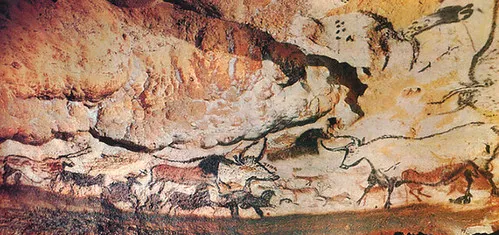
Although the subject is called art history, it is a generalization of all that you can learn. Yes, you’ll comprehend what art is, but you will also come to ancient cultures, a variety of religions, and how the world used to be. The evolution of art is another topic learned, and it is important to know in this day and age. For instance, if we look at prehistoric art, we can see the impressive abilities early humans had. The Lascaux cave in France is a perfect example. The picture above presents the Hall of the Bulls in the Lascaux cave. It houses over 6,000 figures of animals interpreted to be for hunting. Now, art historians aren’t certain what this was used for, but they can make an educated guess. Many believe it’s telling a story, a hunting strategy, or offering imagery for a future hunt. This alone shows the talent and experience people had 20,000 years ago.
During the fourteenth century, the Renaissance started. This marked the beginning of the study of anatomy and love for classical literature. The realism and pure time it took to make these paintings truly reveal the geniuses of that period. Comparing Mona Lisa by Leonardo da Vinci to ancient paintings shows the evolution of excitement towards art and anatomy.
Although thanks to the advantages in technology and society being much more open to holding controversial conversations and pressing issues such as poverty, war, racism, gender inequality, sexuality, etc., art is still used today as a way of self-expression and individuality in addition to highlighting such issues in ways words cannot convey due to its strong emotional impact. For example, after learning that over 1,000 San Franciscans had been lost to AIDS when planning the 1985 candlelight march in remembrance of the assassination of Harvey Milk and Mayor George Moscone in 1978, activist and author Cleve Jones asked each marcher to write on a placard the name of anyone lost due to AIDS and tape these placards on the walls of the San Francisco Federal Building. This sight then prompted him to create the NAMES Project AIDS Memorial Quilt, a 54-ton tapestry including nearly 50,000 panels personal to more than 110,00 individuals, and is considered the largest community folk art in history. This artwork not only captures the physical weight of the hardships not just of AIDS itself on its victims, but the weight put onto thousands of families whose only way of remembering their loved ones was through this artwork, since many were refused funeral services by funeral homes and cemeteries to handle them. Then, with the 2020 COVID-19 pandemic, the National AIDS Memorial launched a 50 State virtual exhibition of the quilt. “Bringing the Quilt virtually, we hope its power and beauty can serve that same purpose for those who are experiencing loss and grief due to Covid-19,” said John Cunnigham, the Chief Executive Officer at the National AIDS Memorial, showing that art can carry emotional meaning throughout history, not just one period of time.
Today, art can be perceived in many different ways depending on who you ask and what they view as art, in addition to what moves them and what does not. Whittney Crocus, a senior who has a strong passion for art and fashion, said in her opinion, “Art is defined as something that has creative meaning and a place, whether it is manmade or from the weather conditions.” So far, manmade art has been the primary focus, but nature, too, has its part to play in the art world. For example, at the bottom of the Pacific Ocean off the coast of Japan, decorative circles can be found decorated with shell fragments with sculpted ridges in the sand created by white-spotted pufferfish for the sole purpose of plopping themselves in the middle to attract a mate. Similarly to this, male bowbirds decorate their nests with moss, ferns, flowers, shells, and colorful paper, also to lure in a mate. Who knew art could be so romantic!
Alexandra Perlini, a junior who is currently taking Advanced Placement Art History, says taking the course has opened her eyes to “the values, beliefs, historical context, and intentions behind a piece rather than just its appearance.” In her personal opinion and experiences, art today differs from art seen thousands of years ago because now there is a “broader range of perspectives we see today, especially women’s voices that were historically excluded. Modern art allows for more freedom, boldness, and unrealistic expression.”
Today, although the unfortunate truth is that the world we live in still faces a lot of censorship and ignorance to minority groups voices and everyday problems, art has evolved from just being used as a form of entertainment, attraction, and form of survival whether in the form of architecture, a tool, or artwork to please the masses, to now not holding a strict definition and rather allowing any individual to express themselves in whatever form of art they please.