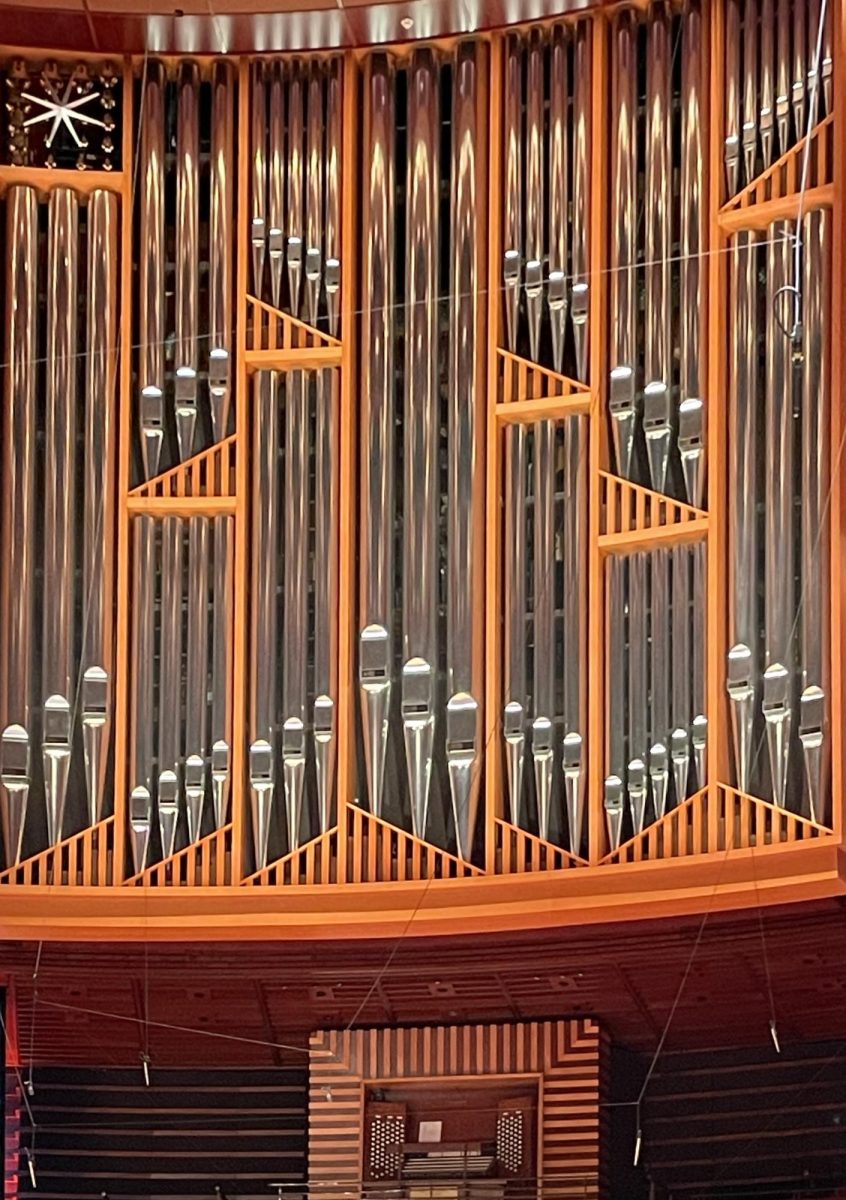
When you think of the Billboard Hot 100, you probably remember a song that everybody was humming in school or that you saw all over social media. You think of that catchy tune that was around for a while before it was replaced by the next big hit. Now, something a little crazy to see on the Billboard Hot 100 would be classical music. And to take it a step further, the last thing you’d expect to see is a pipe organ piece. Ok, why should you care? The pipe organ may be much more intricate and interesting than you think. So then why is it not commonly seen in today’s music genres? Well, it actually is, but not in a classical capacity. In order for the pipe organ to get a spot in our modern music style, it needs to bend to the style that artists use today.
The human race has exponentially increased its ability to advance technology in the past century. Thanks to the internet, we have answers to nearly all our questions at the tips of our fingers. Yet this advance in technology doesn’t belong only to the internet, cars, money, weapons, etc., but also to music. New instruments, software, and sound inventions have made a huge impact on the music industry and have fed interest in an infinite number of new music genres. While this is a great advancement, we tend to leave the older things in the past unless they are good enough to stay relevant. The pipe organ is still relevant in the classical music circle, but how about the pop, hip hop, rock, and rap scene, all the “new” age music?
“It’s definitely still used, but pop, no, hardly ever. Most of that stuff is electronic; it’s almost all been replaced by new tech.” Says James Estep, a musician. It is quite a challenge to fit the pipe organ into most of the contemporary genres we listen to today. But why is it a challenge? The pipe organ is mostly a solo instrument due to its sound and power. “Music these days is very much vocalist-centered, and it’s kind of hard to blend those two. It is not an accompaniment to the solo voice. It is also made to fill out halls and play beautiful and complex music. Music today is very simplistic,” says Estep. Now that doesn’t mean that it is never seen in modern music. There are a handful of modern songs that aren’t classical that do use the pipe organ as an instrument. Like AURORA’S “The Seed ft. Anna Lapwood, or “Close to the Edge” by YES. It is just not an instrument that is easy to combine with the style of music today.
The pipe organ may not appear often in the contemporary scene, but there is nothing to fear about it going “extinct.” “No genre of music ever really dies. There’s always gonna be someone who likes it and keeps it alive.” Says Estep. There will always be someone to keep any given thing “alive” and relevant. People who are passionate about their desire. And the pipe organ has a very large community dedicated to it. Organist Mathew Schwinghammer shows that passion. “It(the organ) is a combination of history and mechanical innovation. They’ve made strides in recreating it digitally. But there is nothing like having those bass notes rumble through your feet and hearing those hundreds of individual pipes playing at once.”
Most of the organ sounds you hear in modern music are digital recreations of the instrument. It is created by recording the sounds of an actual pipe organ and formatting it as a midi instrument, which allows you to play these sounds on any digital keyboard. “I feel like in the modern age of music, digital recreation does a good job of bringing the instrument to the average person. You can’t haul a pipe organ around. It’s more realistic to use MIDI in those live settings,” says Lennon Mokes, local musician. These digital recreations bring the sounds to the mainstream ear. The option is now there if you want the sound of the organ in your song. It’s much easier than renting out a church and setting up a recording setup. “The only downside to the digital recreations of the pipe organ is that they are all the same. You can’t hear the specific characteristics of every organ, or hear the full extent of the instrument,” Mokes says.
Although the pipe organ may be a challenge to fit into the contemporary music scene, it is still something that can add great color to any music; in the end, it’s up to the producer. It may very well be that the organ thrives and “lives its best life” in the place it’s in now, the worship/classical space, but, as stated earlier, there’s no reason it can’t be included in contemporary music. The organ might sacrifice some of its abilities when used in a midi fashion, but the digital recreations get the sound across adequately enough. In the end, if the organ makes it into today’s music in any capacity, whether that be jazz organ or different digital recreations, the music is better off for it.
The pipe organ may not be able to fit into the contemporary music scene, but it doesn’t need to. While it is a curious thought about what that would be like, there is no reason. Not when the organ already thrives and “lives its best life” in the place it’s in now, the worship/classical space. The organ would sacrifice its sound if it tried to mesh with modern music to take an accompanying role. Sometimes, the organ is best when it is “churchy” or “sinister.” People don’t understand the beauty of the instrument; if they did, I think it would be a different story. But that’s ok as well. Everybody doesn’t need to know what this instrument is; those who do enjoy it, and the people who don’t enjoy their music.