Twelve years after its release, Christopher Nolan’s Interstellar remains a benchmark for what ambitious filmmaking can achieve. The 2014 science fiction epic, which follows ex-NASA pilot Joseph Cooper (Matthew McConaughey) on a desperate quest to find humanity a new home, earned $188 million domestically and an 8.7/10 rating from 2.4 million IMDb voters. But its true legacy lies in how it married groundbreaking visual effects with its human storytelling. Something that continues to influence filmmakers today.
“Nolan takes something as abstract as time and turns it into a tangible emotional force,” says Thomas Cooke, who attended film school and works on the set of The Wolf of Wall Street. “That’s incredibly difficult to pull off without losing the audience, but he stays grounded through his characters.”
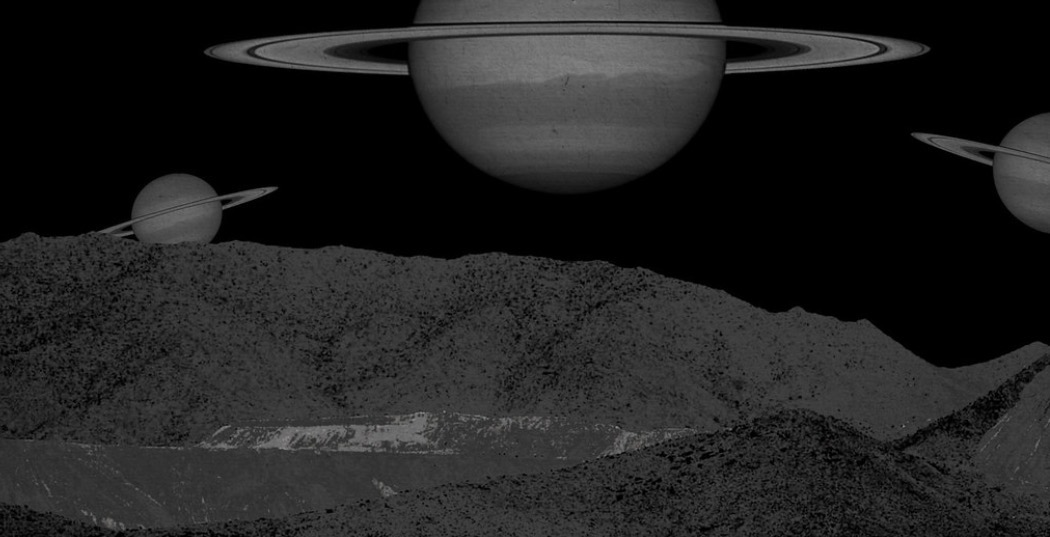
This began with Nolan’s insistence on practical filmmaking. Rather than relying solely on computer-generated imagery, the director used miniatures, real sets, and in-camera effects whenever possible. Cinematographer Hoyte van Hoytema shot the film using IMAX cameras, a format that records on actual film rather than digitally, creating some of the highest resolution images ever captured for a motion picture.
“Film school drills into you how practical effects create a realism that audiences subconsciously feel,” Cooke explains. “It’s clear that Nolan wanted the actors to react to real environments, and that authenticity comes through on screen.” The results speak for themselves. Interstellar won the Academy Award for Best Visual Effects and a BAFTA for its physically accurate depiction of a spinning black hole, images created in collaboration with physicist Kip Thorne.
Hannah Godshall, a film enthusiast, describes Nolan’s approaches as “deceiving because it seems so straightforward, but everything is intentional.” She points to several moments that showcase this meticulous craft. The terrifying wave planet sequence, the gut-wrenching reveal when Cooper returns to his ship to find 23 years have passed, and the shocking betrayal by Matt Damon’s character.
“Nolan works with very stark and neutral colors, so when bright colors do appear, they stand out so much more,” Godshall notes. This careful color palette creates visual impact without overwhelming the story, a technique Nolan has used throughout his career, from The Dark Knight trilogy to Dunkirk.
The iconic docking scene exemplifies how all elements of Nolan’s vision come together. As Cooper desperately attempts to dock with a spinning aircraft, van Hoyteman’s camerawork, alternating between claustrophobic interior shots and vast exterior space imagery, harmonizes with Hans Zimmer’s thundering organ score in “No Time for Caution.” The sequence builds to an almost unbearable tension, immersing viewers fully.
Zimmer’s collaboration with Nolan has produced some of Cinema’s most memorable scores. The two have worked together on Inception, Dunkirk, and The Dark Knight trilogy, developing a creative partnership built on trust and thematic storytelling. “You’re so caught up in the visuals that you don’t notice the score, but it’s essential to the film,” Godshall observes. “Zimmer creates very thematic music; you recognize it when it plays again and associate it with certain characters, almost like theme songs. It determines your comfort level in that moment.”
Nolan famously gave Zimmer minimal information before the composer began work on Interstellar, providing only a single page describing a father and child relationship. The resulting score focuses on intimate, emotional moments rather than loud space opera, perfectly complementing the film’s human core.
Will Interstellar remain relevant decades from now? Both Cooke and Godshall believe so. “Films that ask big questions tend to age better than ones that rely solely on trends or effects,” Cooke argues. “Absolutely, it will continue to be relevant.” Godshall agrees. “Nolan doesn’t miss because of how involved he gets, how clear his vision is, and how he will never be too impatient to turn completely to CGI. He takes the time to do it right.
That appreciation extends to audiences worldwide. Nolan stated in Forbes Magazine that his goal was for viewers to “feel like they’ve been through an experience with these characters.” More than a decade later, that mission has been accomplished. Interstellar didn’t just show us the stars; it made us feel the weight of time, the pain of separation, and the power of human connection across impossible distances.