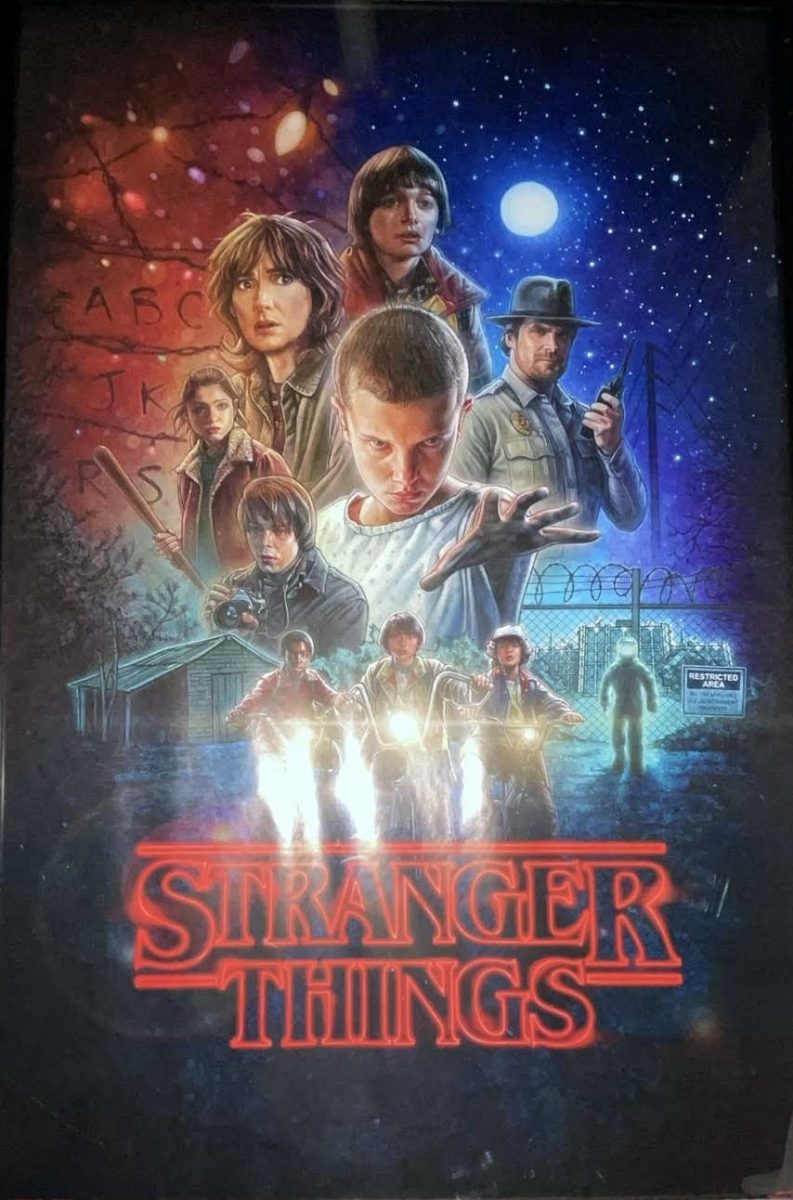
From giving viewers something to be grateful for on Thanksgiving Eve to leaving fans divided and confused, all there is to wonder is what happened in the writing room? Almost ten years ago, on July 15, 2026, Netflix released a show originally pitched to be an anthology series, with its first season meant to be a standalone story about a young boy going missing who, with the help of his family, his friends, and a girl with psychokinetic powers, is found to be taken by a force larger than they can imagine. Although the ending of the first season left viewers heavily pleased, it did leave a mix of closed and open endings, with the lost boy being found yet still connected, the “superhero” sacrificing herself, yet hinting at still being alive, and the monster getting defeated, yet the main evil still lingering.
Within weeks of its release, the first season of the beloved and well-known Netflix show Stranger Things gained massive popularity and success, to the point that Netflix renewed it for not just one or two new seasons, but rather four. The last season of Stranger Things was split into three volumes, on three big holidays, and all releasing different numbers of episodes each time: four episodes released the day before Thanksgiving with a runtime of around four and a half hours, three episodes released on Chrismas Day with a runtime of almost three aand a half hours, and the final episode released on New Years Eve with a runtime of two hours and eight minutes. Volume one, although there was some critique about it, with the fourth episode leaving fans with high hopes and a rating of 9.4/10, left many fans excited for close to a month to see how Volume two and three would close up the story. Unfortunately for many fans, the month-long excitement was shattered with many more plot-holes and confusion coming out of the second volume, and even more as the credits rolled after Joyce Byers killed Vecna, who was left impaled by Eleven Hopper, by decapitating him. After that, a 40-minute-long epilogue followed right after Eleven took her own life to not suffer the cruelness she might have faced by the government, with the ending scene being the original party; plus Max playing one more game of Dungeons & Dragons, leaving as Mike Wheeler’s young sister, Holly Wheeler, and her new friends arrive and take over.
The main reason for fans’ dissatisfaction comes from the large amount of plot-holes and loose ends, not just in the storyline but also in the characters as well, from small issues like “What happened to the pregnant women in the Upside Down?” or “How was Max able to graduate?” to large ones like “How did Will Byers not die or at least get harmed if he was connected to the Hive Mind?” and “Did Mike get to say goodbye to Eleven, or was that all in his imagination?”
“The ending of all the characters was cloudy, and it felt like not all characters had a good ending,” said Justine Dinsmore, a senior in high school who has been a fan of the show since season three. Like Dinsmore, many other fans were left annoyed at how the Duffer Brothers wrote certain endings for their characters, including making two of the most traumatized characters die, with one of them taking her own life, making Mike Wheeler become, in his imagination, similar to his father, Ted Wheeler, and leaving Will Byers with an imaginative boyfriend after his sexuality was heavily explored not just in season five but in past seasons as well, in addition to not going into more depth about his trauma, powers, and connection with the Hive Mind.
A few days after the show’s finale, theorists quickly came up with a new theory that on January 7th, a ninth episode would be aired to reveal that the happy ending of the finale was all an illusion created by Vecna and many believed in this not only because of the heavy amount of plot-holes and poor writing, but also to other “clues” as well. The main clue was the repetitive use of the number seven, first seen when Will rolled another seven in the finale, just like he did in the first episode, and then further speculation was made when people realized that Orthodox Christmas, another holiday, is celebrated on January 7th. Other evidence that supported this theory included the characters hand postures matching Vecna’s, orange graduation gowns resembling prison unfiroms, D&D books spelling “X A LIE,” and the apperance of a “False Hydra” monster known for illusions in their final game of D&D. “I thought the ending was really vague and they had more to tell because the endin left a lot of hole sin the story,” Dinsmore said in support of why he believed in the theory.
Even though many fans were left dissatisfied by the ending of Stranger Things, some argued in support of the series finale by claiming that fans are upset because they went in with high expectations. Many people who enjoyed the ending also felt a sense of nostalgia when watching it, especially seniors in high school who grew up with the character and now feel like they are graduating with them. “I think it was a good ending, but felt like the fight scene was too quick, and I felt like the ending to the character was good too, and tied in all their stories,” said Haley Walker, another senior in high school who began watching the series either last year or the year before that. Walker also claimed to have not believed in the Conformity Gate theory, saying, “I thought the ending was what it was.” Although supporters and haters of the new seasons tend not to meet eye to eye on many things, both Walker and Dinsmore agree that the final battle should have been longer and more intense since, with all the chaos and crazy monsters introduced throughout the series, it was strange not to see them in the final showdown.
Sources:
https://www.esquire.com/entertainment/tv/a69937319/stranger-things-conformity-gate-fan-theory/
https://scriptmag.com/stranger-things-season-5-the-finale-review