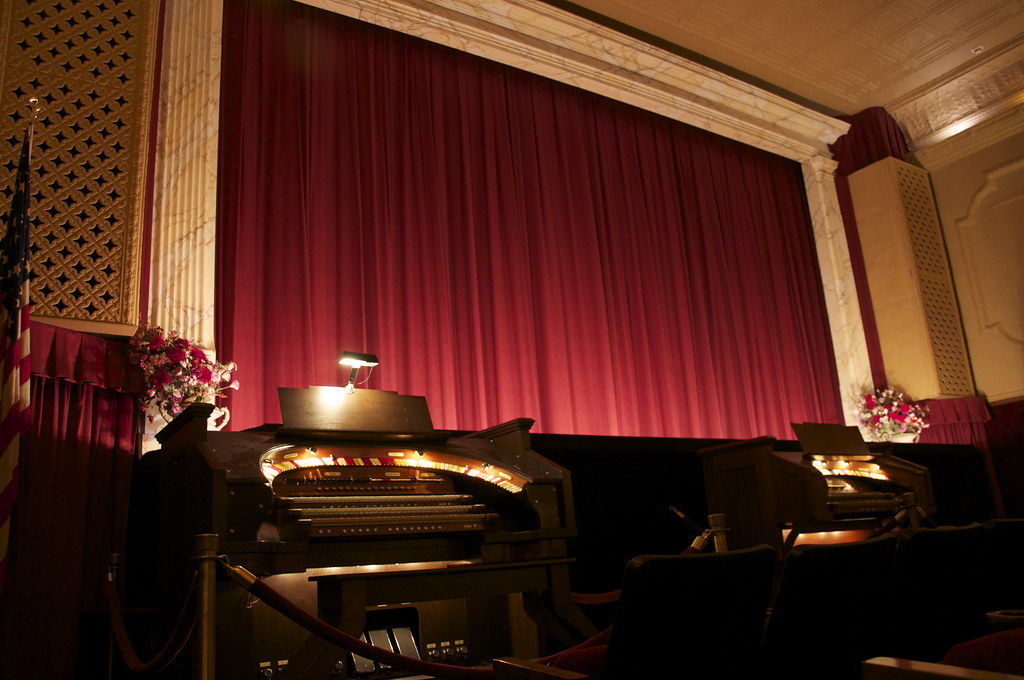
What is now a decoration used to be the sound of the silent film era: the theater organ. Going to the theater in the olden days would be an exciting trip. You saved up your allowance and decided you wanted to go see the new silent film. Although it wasn’t completely silent, because that would be an awkward theater. Someone would be playing music live; they didn’t have Spotify. For small theaters, a single piano would suffice, or maybe a small house orchestra like a quartet. But as theaters expanded, a single piano couldn’t suffice, and when costs were optimized, it simply couldn’t be justified to pay for an orchestra. This is when the new wave of theater organs began.
Because there is no audio for the films, all of the sound aspects of the movie have to come from the instruments in person. An organ is the best option for this. Not only can it play the sound of a piano, but also a wide variety of sound effects and different instruments to help you become truly immersed in the movie. Unlike an orchestra, the wide variety of sounds and instruments can be played by one or maybe two people, compared to the hefty cost of an orchestra.
The utilization of theater organs went away because there wasn’t a demand for it, but I’d still argue there are people out there who care. Music enthusiast Charlie King, when asked if he believes theater organs should still be used, said, “I think it depends cause not every movie needs them and most movies have soundtracks. I think it’s a neat thing for theaters to have when going with an old style of building.” Obviously, theater organs will never go back to their consistent usage back in the day, but it’s clear that there are still people left who would like to see them being used. “I think people can do whatever they want. If they want to restore a theater like the Grand (East Greenville), then sure, keep it around. If they’re not restoring a theater, then there’s really no need. It’s a distinct sound that really isn’t played much elsewhere,” says Dan Estep. The art of the theater organ can’t stand without silent films, and whether restoring an acoustic theater organ or buying an electronic one, it’s not practical to buy out of the context of the theater unless it’s a hobby you enjoy.
If you haven’t guessed by now, theater organs are a very rare sight. There are two major reasons for this: the end of silent films and the Great Depression. Theater organs had the sole purpose of providing audio to silent films, but it wasn’t long before the mass production of speakers rendered silent films obsolete. In addition, for the theaters that didn’t have speakers and still used organs, the Great Depression put an end to that. It simply wasn’t possible to pay for even one, maybe two people operating an organ.
Ultimately, theater organs are a dying art, and we should appreciate them while they’re still here. Nearly all of the theater organs were thrown out, sold, or, in rare cases, installed in private homes and churches. There are very few still in theaters, so if you ever get the chance to see and hear one, do so, because their time is limited.