Grandmacore is a movement that involves immersing yourself in the nostalgic and cozy activities usually associated with grandmothers. Baking and crocheting, once dismissed as old-fashioned pastimes, have experienced a remarkable resurgence among Generation Z and Millennials. What began as hobbies for the pandemic, when lockdown sent people searching for home activities, has evolved into a sustained cultural shift.
Over 73% of crocheters today are between the ages of 18 and 34, a dramatic shift from the craft’s elderly stereotype. Baking, as well, has experienced increased public interest well beyond your grandmother’s kitchen. Grandmacore isn’t just a trendy aesthetic choice; it’s a mental health lifeline. Research shows that relaxing activities, such as crocheting and baking, offer genuine psychological benefits, including reduced stress levels, improved mood, and enhanced creativity. In fact, a 13-day study conducted by Tamlin S. Conner et al. in 2016 involved 658 participants who reported on the duration of their relaxing and creative activities, their positive and negative effects, and their experiences of flourishing. Overall, the results showed that participating in these activities daily led to higher levels of positivity and flourishing. In a generation of overstimulation, activities that give you time away from a screen have become rare, but are very much needed to promote positive mental health, focus, and well-being.
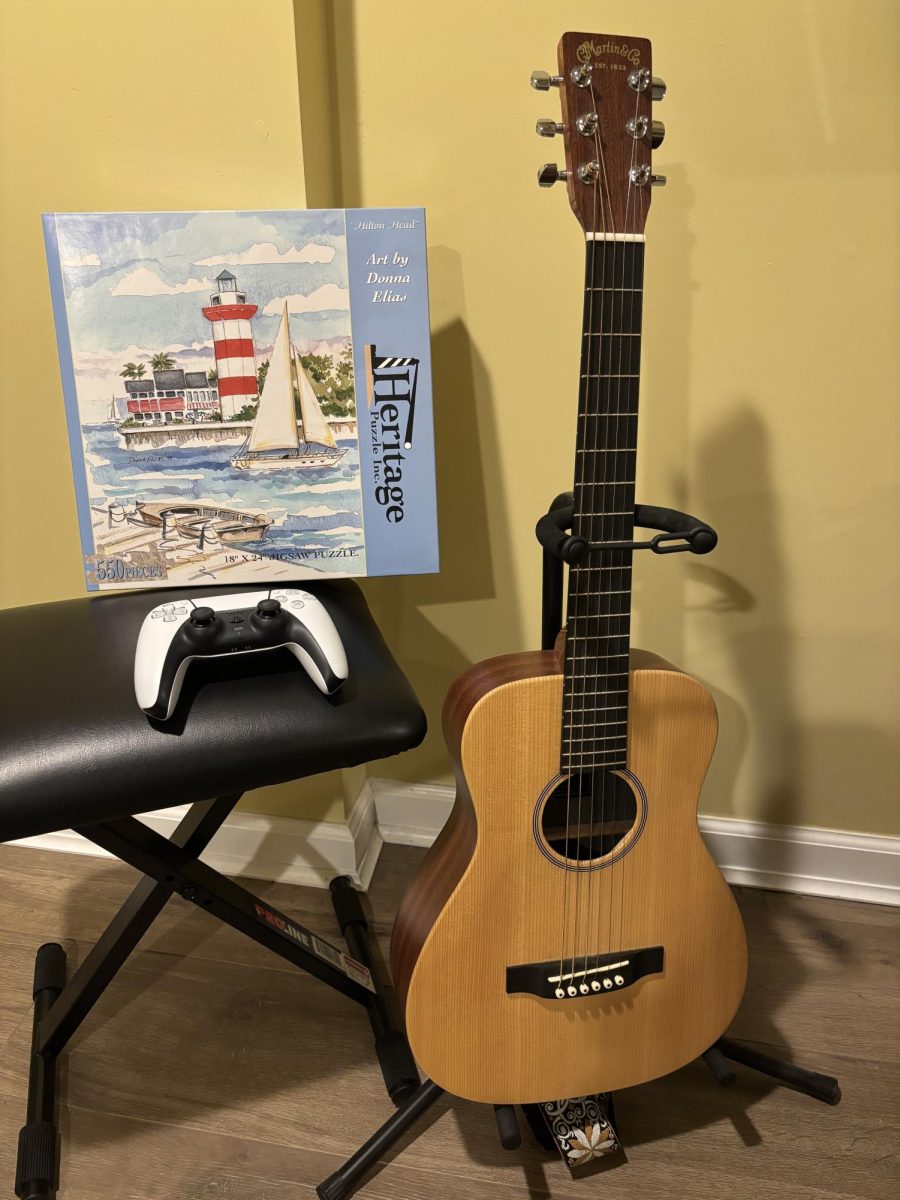
One example of a Generation Z member who has taken it upon herself to break stereotypes is Tegan Dougherty. Dougherty is an avid puzzler with a space in her home specifically dedicated to this hobby. She describes her ideal afternoon as “a Diet Coke, a puzzle depicting a beautiful coastal landscape, and Gilmore Girls playing in the background.” This hobby not only allows puzzlers to create beautiful pictures but also stimulates the brain. Puzzling is similar to crocheting in that it stimulates mental processes through focus and problem-solving, while also allowing participants to relax and escape the world of hustle and bustle.
Another member of Generation Z to embrace the Grandmacore lifestyle is Abigail Brown, a senior at Pennridge High School. A long-time admirer of wood whittling at craft fairs, Brown was recently gifted a set to make her visions a reality. She explains her love for the craft through her love for giving meaningful gifts to others. “Not only is it cheaper than going to Target and buying the same item, but it’s also a lot more meaningful considering the amount of time and effort that went into it,” Brown explains. But, to Brown, whittling is more than just about making a cost-effective, thoughtful present; this hobby allows her to tune the world out. By focusing on the wood and knife in her hands, she can disconnect herself from worry and stress, often not realizing hours have passed since she began. “It makes me feel good and accomplished about myself, knowing I spent a few hours doing something tangible with my hands instead of being on my phone,” says Brown, further proving the importance of the Grandmacore movement. Wood whittling is a hobby like many others that allows people to ground themselves in something physical, rather than getting caught up in the wave of technology and screen time.
Rather than being another passing trend, Grandmacore points to a broader cultural shift in which young people are actively redefining what rest and productivity look like in a digital age. As Generation Z and Millennials continue to face long-term stressors such as climate change, economic uncertainty, and constant online pressure, slow-paced hobbies are increasingly appealing and unlikely to disappear. Looking ahead, Grandmacore may evolve beyond individual downtime and become integrated into community areas, mental health centers, and even schools. It provides a low-cost, accessible form of self-care. Further research on the topic could explore how hands-on hobbies, including crocheting, baking, puzzling, and wood whittling, support mental health compared to digital tools. Ultimately, Grandmacore shows us that growth does not always mean moving faster or doing something new; it can mean returning to something that has always quietly helped people feel calm and connected.
Sources:
https://conversationstoremember.org/the-rise-of-grandmacore/
https://www.tandfonline.com/doi/abs/10.1080/17439760.2016.1257049
https://www.tandfonline.com/doi/abs/10.1080/17439760.2016.1257049