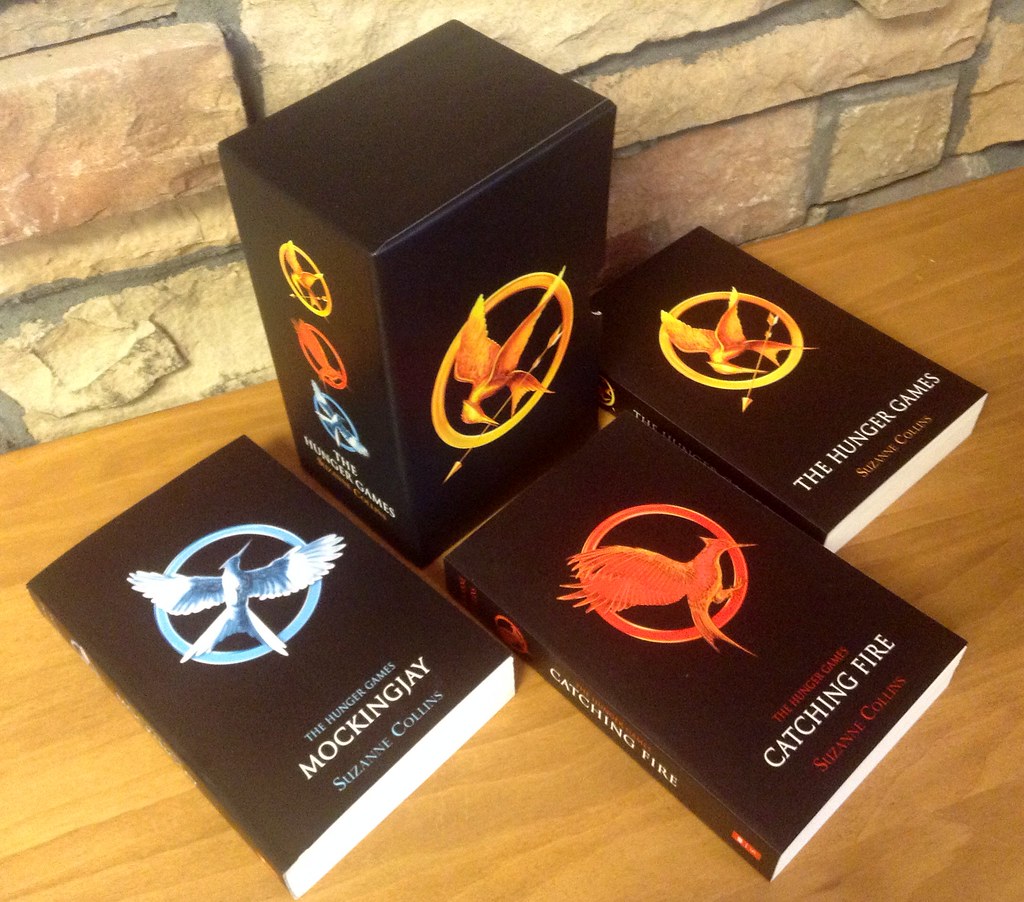
The Hunger Games, published in 2008, was the first of five books written by Suzanne Collins in this series, which would reach a total of 385 weeks as a New York Times #1 Best Seller. The Hunger Games is set in a futuristic nation called Panem, where there are 12 districts serving a capital city. Each year, a boy and a girl are taken from each district to fight to the death in an arena designed to entertain the capital elites. In an effort to explain why the series continues to top the charts over a decade later, Kim Mulloy, Pennridge librarian, states, “The character development is amazing, and the relationships Katniss makes are very well developed.” Collins based the story on the Greek myth “Theseus and the Minotaur,” in which children are sent into a labyrinth to be eaten by a minotaur until Theseus slays the beast. Collins explains in an interview with School Library Journal that, “in her own way, Katniss is a futuristic Theseus.”
Every year, the Hunger Games are televised for the entire nation of Panem to see, with the districts hoping for their children to come back alive and the capital relishing in the drama of each death. This part of the story was inspired by the broadcasting of the Vietnam War when Collins was a child. Her father fought in the war for a year, so she understood that watching the broadcast wasn’t like watching a TV show. She felt people were becoming desensitized to this form of media and wanted her story to remind people that war isn’t meant for audience members; the soldiers don’t just take a break when the commercials start rolling.
Katniss Everdeen was 16 years old when she was reaped from the children in District 12 to go fight in the Hunger Games. She was lucky enough to be surrounded by people like Cinna, her pre-games stylist, and Haymitch, her mentor, who would not conform to the whims of the capital. The situation of Panem, a small elite population, a large impoverished population, was not drastically different from the real-world political climate in the 2000s. Recent Hunger Games reader, Bailey Good, explains that, “The allegories to the real world are what resonated with me the most. Because it is a dystopian world, it is kind of a reminder of what could happen in our world.” Not long after the last book in the Hunger Games trilogy was published in 2010, the Occupy Wall Street (OWS) movement was formed. OWS protested against the drastic economic inequalities of the globe, with their slogan being “We are the 99%” to highlight the disparity between the wealthiest 1% of the world and everyone else. This rebellion mirrors Katniss’s fight against the elitist capital.
The Hunger Games Series consists of five books, The Hunger Games trilogy: The Hunger Games, Catching Fire, The Mockingjay, and two prequels: The Ballad of Songbirds and Snakes and Sunrise on the Reaping. The trilogy describes Katniss’s rebellion, while The Ballad of Songbirds and Snakes gives us a look at the story from the villain, President Snow’s, perspective. Sunrise on the Reaping describes Haymitch’s games and the atrocities that Katniss will go on to rebel against.
Through The Hunger Games, weaving together ancient mythology and modern warfare, Collins created a story that forces readers to confront uncomfortable truths about entertainment and desensitization. The series’s cultural impact, evident in its unprecedented commercial success and its resonance with real-world movements, demonstrates how fiction can both mirror and shape our understanding of social injustice.
Sources:
https://www.scholastic.com/newsroom/online-press-kits/hunger-games-series.html
https://www.goodreads.com/series/73758-the-hunger-games
https://www.lionsgate.com/franchises/the-hunger-games