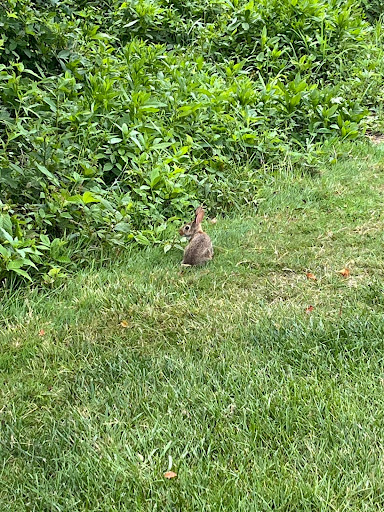
Fitness in the animal world is not measured by muscle or endurance but by survival and reproduction, according to biologists who study evolution and animal behavior. In biology, fitness refers to an animal’s ability to survive in its environment and successfully reproduce, passing its genes on to the next generation. This concept helps explain why animals with specific traits or behaviors, such as camouflage and cooperative hunting, thrive, while others do not. Scientists say understanding fitness is key to understanding evolution itself, as it answers the fundamental questions of who survives, who reproduces, and why certain traits persist over time.
“Fitness really means how successful an animal is at having offspring that survive,” said Mrs. Taylor, an ecologist and teacher at Agnes Irwin School. “It’s not about being the strongest animal out there. An animal could be strong, but if it doesn’t reproduce, its traits don’t matter in evolution.” Biologists emphasize that adaptations – physical, behavioral, or physiological traits shaped by natural selection – increase fitness by improving survival or reproductive success. A stick insect’s camouflage helps it avoid predators, while a peacock’s elaborate tail attracts mates, even though it may seem like a disadvantage. “If a trait helps an animal live longer or attract mates, it increases that animal’s fitness,” Taylor said. Some scientists also question whether animals intentionally stay fit the way humans do. Eco-physiologist Lewis Halsey, who studies how animals use energy, suggests that most animals do not exercise for fitness but instead rely on daily behaviors that prepare them for intense demands when needed. “They are trying to maximize their reproductive capacity,” Halsey said in research on animal energy use, noting that animals that conserve energy can invest more into offspring. Taylor agreed, adding, “I don’t think animals think about staying fit the way humans do, but some of their everyday behaviors probably help keep them ready.”
Research shows that fitness is always tied to an animal’s environment and the pressures it faces. In areas with many predators, animals tend to stay lean, fast, and alert, as being slow or heavy can be deadly. “When predators are around, animals usually need to stay faster and more alert,” Taylor said. “Being too heavy or slow can be dangerous.” In contrast, animals with few natural predators, such as giant pandas or laboratory animals, are often more sedentary and store more energy, which can lead to increased reproductive success. Some species also show an ability to rapidly regain fitness without regular exercise. Barnacle geese migrate thousands of kilometers without training beforehand, while penguins lose muscle while caring for eggs on land, but quickly recover once they return to the sea. According to scientists, these animals rely on evolutionary adaptations that allow their bodies to adjust quickly to changing demands. “It shows that their bodies are really well adapted to their lifestyles,” Taylor said. Studying how animals manage energy and fitness could reshape how scientists understand animal behavior, ecology, and evolution. Rather than striving to be the strongest, animals succeed by being the most efficient, adaptable, and capable of passing their genes on, proving that in nature, fitness is about survival strategies, not strength.
Sources:
https://fiveable.me/animal-behavior/unit-1/fitness-inclusive-fitness/study-guide/LL0BSDuCPo9HnHja
https://www.discoverwildlife.com/animal-facts/do-animals-train-to-stay-in-shape
https://animalecologyinfocus.com/2016/01/21/do-animals-exercise-to-keep-fit/