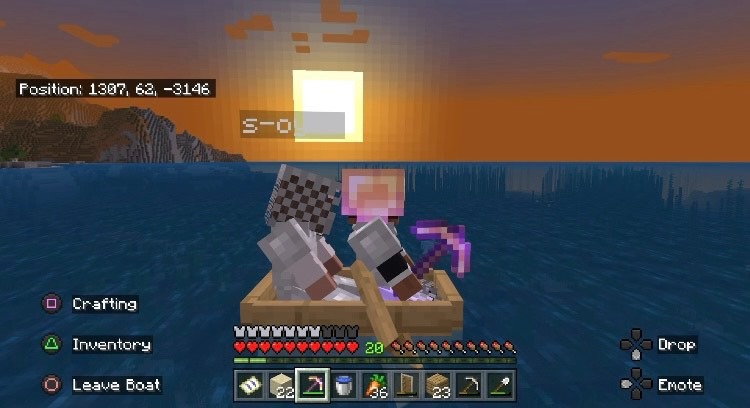
The simple building blocks of Minecraft are shaping a new era of digital arts. Across screens and servers worldwide, players are transforming the game’s chunky cubes into sprawling cities, creating sculptures and detailed artworks, and turning the 15-year-old title into an unlikely home for digital expression. Minecraft began as the personal project of Swedish programmer Markus “Notch” Perssons, who created the original game known as Java edition in 2009 while working for game developers King, who is now known as jAlbum. The early game was made public in May of 2009 and posted on an independent forum for game developers known as the TIGSource forum, in hopes of receiving input. Continuous updates drew players, and by 2011, the full version had arrived and was released.
Growing in popularity quickly, Notch founded the video game company “Mojang” with his previous colleagues Carl Manneh and Jakob Porser, to continue to expand the game. Years followed quickly, and Minecraft gained popularity fast. Mojang production was later bought by Microsoft for 2.5 billion dollars. This allowed Minecraft to reach all different consoles, gaining more sales. Much of its staying power lies in its art design. Players explore vast, open worlds where every tree, desert, and village is built from cubes that can be rearranged at the players’ choosing. With two main modes, Creative and Survival, users are able to either build freely or gather resources and survive nighttime threats. Lightning, texture, and color have grown more sophisticated with each update, and the game’s block styles vary across platforms. As the game expanded, so did updates, Java transformed, and led to the creation of the Bedrock edition, which quickly overshadowed in popularity due to its new and improved art style. Java edition needed a new look to match Bedrock’s growing popularity of visuals, so it improved texture definition for the blocks while blending the light color pop of the outdoors. The key art debuted in 2024 and gained attention for its different aesthetic, adding new detailing such as cherry trees, sunflowers, and much more.
For many players, that artistic freedom is what keeps them motivated to keep playing. “Minecraft really allowed you to create endless possibilities,” said Nadia Elmore. Elmore grew up playing with her brother and online friends she met through the years. The game, she said, rewards imagination and becomes “more fun with others.” Angie Garcia first picked up Minecraft at 14 and now helps maintain a three-year-old shared server that continues to expand with two other friends. “The art style is so complex, and there are so many different biomes,” she said. She explained that everyone has a job to do; while her friends mine for resources, she stayed behind to design and build their living space. Much like many other players, Garcia let her creative freedom be free by using creative mode to build pixel art, such as Finn from Adventure Time, and making her interests into a 3D world.
Minecraft not only allows for creativity to blossom, but also, thanks to the Bedrock edition introducing split-screens that let up to four players share one screen on one console, in addition to public and private services being available in its earliest stages, allows for relationships to strengthen as well. Kate Staffieri, a tenth grader at the Central Bucks High School, was first introduced by her younger brother, Michael Staffieri, and her cousin when she was around ten years old, and immediately began “to build anything and everything when I first started.” Although Staffieri prefers to play in creative on her own to build towers and buildings such as a 250 block building with separate floors made in rainbow order each named after a Marvel character, she notes, “we [Michael and her] used to play survival and we would always get plenty of dogs and I always wanted to build a pink house with cherry wood.” Even though Minecraft may not have been the only reason for their sibling bond, it did provide a space for different minds to come together, with one actually wanting to play while the other wanted to create, all on the same screen.
While Minecraft allows users the ability to create within it, in more recent years, video games in general have inspired artists to create physical artworks based not just on the style of the games themselves but also, in the eyes of Travess Smalley, a generative artist, “generative aspects of play.” One of Smalley’s most well-known works is his Pixel Rug series that uses hundreds of procedurally generated works spanning several mediums and display modes to create dense, psychedelic lattice-works of glitching degradations that can best be described as resembling QR codes due to their complexity. Although he was fond of art that “existed in a world of iteration, when he was introduced to Minecraft in 2014, it “made everything click to a whole other level.” Afrah Shafiq, a Goa-based artist whose art style encompasses vibrant contemporary works that fuse Indian and Portuguese cultures, began creating a large-scale sculpture of an anthill in 2023, and it is still in the works today. The exterior alone shows inspiration from Minecraft; however, as the audience enters, they are met with an interactive video game inside, also inspired by Minecraft, that is meant to connect the human mind to nature, specifically by having the “players’ make decisions that affect the individual ants’ behaviors.
Today, as Minecraft still holds onto its popularity and audience it has gained and continues to gain for years, with not only artists basing their works around it in addition to millions of people consuming its content on the daily— with Youtube having Minecraft as the subject to more than one trillion hours of content ranging from machinima animations, which are films inside the game using edited gameplay, in addition to recreation of some of the world’s most famous architecture— who knows what the art world will be faced with in the years to come.
Sources:
https://afrahshafiq.com/work/where-do-the-ants-go/
https://www.itsnicethat.com/features/how-minecraft-inspires-art-271124
https://www.sportskeeda.com/minecraft/all-official-minecraft-key-artworks-how-game-s-art-style-changed-since-release
https://www.artsy.net/article/artsy-editorial-playing-minecraft-creative-boost
https://www.redbull.com/us-en/history-of-minecraft