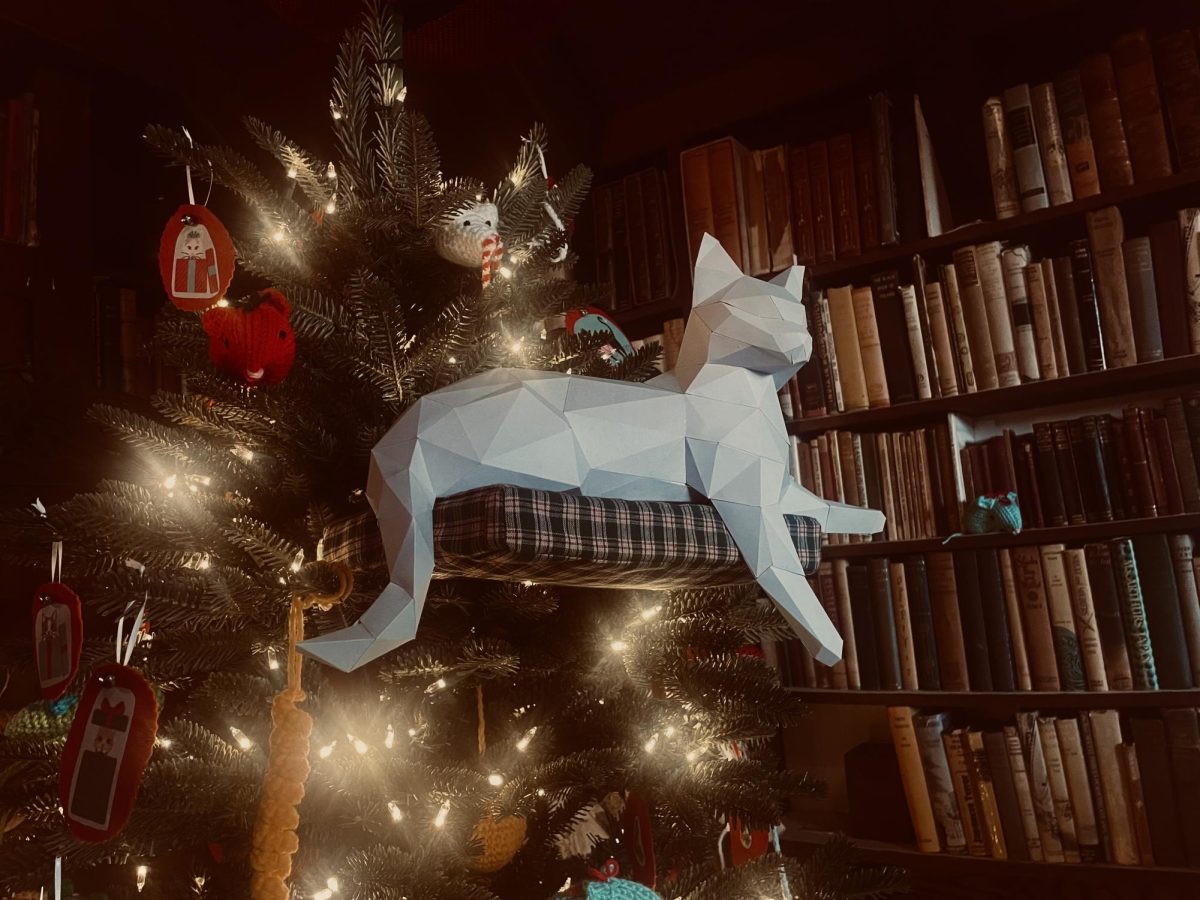
Every year from November to early January, 25 Christmas trees are decorated with lights and displayed at the Pearl S. Buck house for everyone to enjoy. Artists, decorators, and local communities in the Bucks County area can decorate a tree, and the best tree is voted on by viewers who attend. This event was started in 1978 as a way to celebrate American novelist Pearl S. Buck and the holiday season, but it is now a timeless and unique tradition that occurs every year.
The Festival of Trees is an hour and a half informative walk through of the Pearl S. Buck house in Dublin, with each room having one or two decorated trees and holiday displays, which lasts around one and a half hours. These displays are made by local businesses and organizations. Organizations like NOVA, a network of victim assistance, can decorate a tree to bring awareness to their cause. The house is still laid out as it was 50 years ago, with the same furniture and decorations Buck used herself. Not only is this event a great way to find different associations that support good causes in your community, but it’s also a great way to learn about Buck and her many accomplishments.
Buck was an American novelist who won the 1932 Pulitzer Prize for her best-selling novel, “The Good Earth.” She also won the Nobel Prize in literature for her descriptions of peasant life in China. Both of these awards are on display in her house and are shown on the visitor tours to see and admire. Buck was born in West Virginia in 1892, but five months after her birth, her parents moved to Zhenjiang in southern China, where they were missionaries. Growing up, Buck took a liking to Chinese culture and language. After graduating from Randolph-Macon Women’s College in 1914, she went back to China with her husband, John Buck, and lived in Suzhou. It was in Suzhou that she became inspired to write the novel, “The Good Earth.” During World War II, she formed and was the head of the Chinese Emergency Relief Committee, which sent funds to the country for medical supplies, clothing, and food. She also led a national campaign to repeal the Chinese Exclusion Act of 1882, which she succeeded in. In 1938, Buck and her husband moved onto the farm that is now known as the Pearl S. Buck house. While living there, Buck adopted many multiracial children, as it was more difficult for them to be adopted. In 1949, she founded the Welcome House, an adoption agency that helped Asian children be adopted.
Here at Pennridge, there is a Pearl S. Buck club advised by Jenna Berger. Built on bringing students with a passion for community together, it’s a student-led club that meets once a month. Berger believes that the club helps students, “Form friendships and learn about Pearl S. Buck and why she’s important.” The Pearl S. Buck club works with Pearl S. Buck International to further their mission of exploring and appreciating other cultures, building better lives for children around the world, and promoting the legacy of Buck. “It opened my eyes to what goes on in the world,” said Nikki Gao, the current co-president for the club, who has gained a greater understanding of not just Buck herself, but also learned about other problems faced in Asia, such as the number of orphanages in Vietnam and how many children with disabilities are in them.
One event that is in the works for the club at the moment is getting Bucks’ daughter, Julie Henning, to come speak at the high school for the kids. This year, the Pearl S. Buck club does not have a display at the Festival of Trees, as their past leader, who started up the club, Brendan Ray, graduated, and the club is starting fresh. Though Pennridge is not represented, if you and your friends are looking for something to do over Thanksgiving or winter break that’s both fun and informational, go check out the Pearl S. Buck House’s Festival of Trees!



Sandra Leatherman • Dec 8, 2025 at 7:42 am
Very well written article. Thank you for the information.