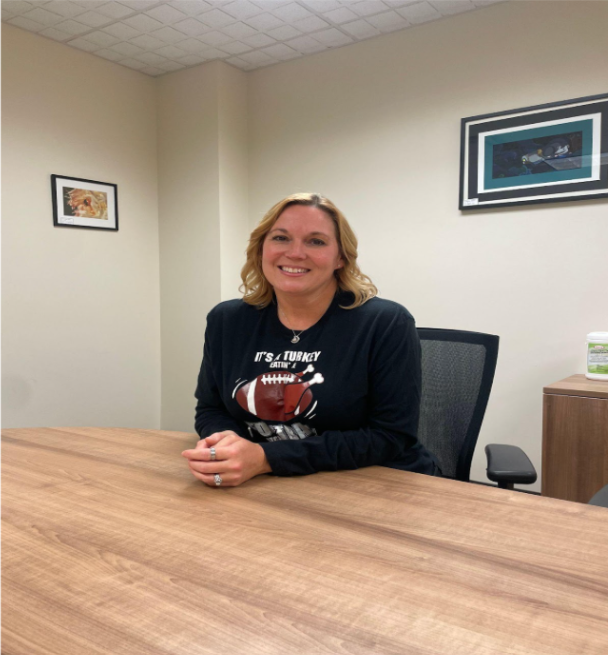
A secretary is more than someone who answers phones. They organize, communicate, schedule, and keep everything in motion. After researching secretary roles and interviewing two key school staff members at Pennridge High School, one thing was clear. Our school depends on secretaries in ways most students never see. Melissa Kraus works in the attendance department. She has been here for one year, and her job remains very focused. As she explained, “I strictly do attendance.” Part of her day includes answering family phone calls and handling early dismissals, absences, and attendance reports. When asked how she stays organized, she described a steady everyday system. “Writing down messages for phone calls or early dismissals we get. Checking emails and putting them into the files.”
She also talked through her filing structure, saying she creates “a file for each year and under that I put different folders: nurse, early dismissal, daily attendance email.” Technology updates are another part of her role, especially as new systems are introduced. With excitement, she shared, “We now have this fancy new technology,” describing the keypad where students sign in late and are automatically entered into PowerSchool. She stays updated on new tech by paying attention to IT and district communication, telling us, “Everything comes from Principal Keddie or IT.”
Another key member of the secretary staff, Kat Harrington, works in the main office as Principal Keddie’s assistant. She has been in the school for four years, but she only started this secretary role in July. Before this, she taught ‘in school suspension’ (ISS), so she understands both the teacher side and the office side of school. She is very organized and still relies on hands-on methods that work well for her. “I still have my calendar book where I write down every day what my to-dos are, and I cross them off.” She also makes sure deadlines stand out visually, saying, “Write really big with the date, highlight it, check every day.” When planning meetings for large groups, she explained the process clearly and confidently. “I look at the calendar for open time slots, and I make sure the conference room is available, then I send the invite request, check responses, and send a reminder two days beforehand. Then I follow up after.” Even though her job can get stressful, she stays calm and focused, reminding us, “I usually take it one step at a time.”
Both secretaries may work in different offices, but their goals connect every day. They keep attendance accurate, communication flowing, and schedules aligned so the rest of the school can run smoothly. Their systems are personal, thoughtful, and consistent. One organizes by year and attendance data, and the other organizes by daily planning and executive scheduling. Different methods, same important job.
Students rarely see the detailed organizing, planning, and follow-up that make a school day work. We only see the results: a late pass printed, a meeting reminder, or an attendance email sent out. But without their work, the school day wouldn’t keep up.
These interviews proved what the research already said. A strong secretary is the backbone of a workplace, and in our school, they are the backbone of each day. They help students, staff, and families stay connected and on track. That kind of work deserves to be appreciated and noticed more often.