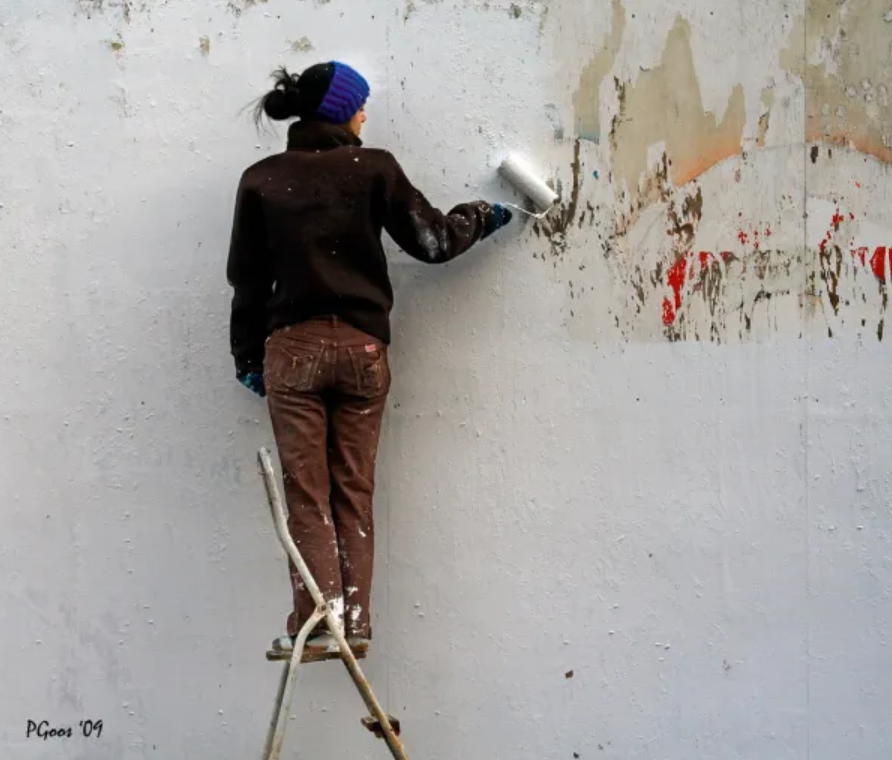
Do It Yourself is a slogan that made headlines long before the 2000s fad we know today. Joseph Moxon’s book Mechanick Exercises was published in 1683, and it explained how to be a blacksmith, cast metal, draw, do joinery with wood, engrave, print books, make maps, and mathematical instruments. This was the first version of old-world DIY. Another example of the at-home making space was seen by engineer James Watt (improver of the steam engine), whose many discoveries were made in his attic. Early on, DIY was about the love of learning. Samuel Smiles’ 1859 book ‘Self Help; With illustrations of character and conduct’ explained how self-education is the duty of man to further society.
During the population surge of the mid-19th century, saving money and being able to use what was given to you were necessities. With so many children being born, toys, clothes, and entertainment had to be made at home rather than bought. This trend continued into the 20th century with the Great Depression of the 1920s and ‘30s creating an even greater need for saving money. In the 1950s, leisure time became more common with workplace regulations being improved. This left time for the DIY movement to really come to life. Media like the TV, radio, and magazines, such as Practical Householder, allowed people to access learning in new ways.
With the creation of Etsy in 2005 and Pinterest in 2010, Do It Yourself took steps into the realm of social media and entrepreneurship. Instead of just having home projects be a way to save money, they became a way to make money too. In today’s world, we have so many opportunities and tools at our fingertips that DIY can be taken to a new level. Everything from building your own computer to designing furniture can be done at home with the help of the internet.
Many students today still use Pinterest for inspiration. Bailey Good, a Pennridge Student who DIYs anything from painting her shelves to hemming her pants, said she finds most of her inspiration from “social media, specifically Pinterest.” Bailey has been renovating stuff all her life. “I first got into doing things myself when I realized I genuinely did not have the money to go out and get things done for me, and doing things myself made it a lot easier not to spend the money that I do not have.” But beyond saving money, there are so many benefits to doing things yourself. “ A big perk of the DIY lifestyle is getting the exact design and color I want for my nails.” Instead of relying on someone else to fulfill your vision, you can have exactly what you want.
This is exactly the view many people have when they start sewing their own clothes. From different body types to different purposes, it has become increasingly more popular to make your own clothes. Sewing machines picked up steam in the early 1800s with the creation of Barthélemy Thimonnier’s practical, chain-stitch machine. Fast forward to today, and what was once considered a necessary household skill has transformed into a creative outlet and form of self-expression. Fast forward to today, some manufacturers are reporting increases of over 30 percent in sewing machines. Social media has fueled this renaissance too, with hashtags like #sewingcommunity and #memade garnering millions of posts from makers showing off everything from cottagecore dresses to tailored blazers. The average home-sewn garment can cost 30 percent to 50 percent less than its store-bought equivalent, and many sewists report that their handmade clothes fit better and last longer than fast fashion alternatives
Ananya Bhatt, a Pennridge Student and avid crocheter, has also made several things as an alternative to fast fashion. “ I specialize in blanks, cardigans, small toys, keychains, flowers, etc.” She has been crocheting since Christmas break of 8th grade, and thinks “ crocheting is a great way to create a personal gift for a loved one that costs less than most other products.” It lets her be more sustainable and gives her “ a brain break from my other work and tasks, as well as something to look forward to as she completes assignments.”
Crochet became a major part of the DIY movement during the counterculture sensation in the 1960s. This was a rebellion against consumerism in which people would make their own clothes and home decor in order to be self-sustainable. With the fast fashion industry booming, people wanted to point out that this trend was bad for the environment and exacerbated economic disparities in the US. This insurgence continued into the 21st century with the rise of slow fashion. In 2007, the term slow-fashion was coined by Kate Fletcher in order to address the unsustainable practices of the fashion industry. Crochet is a major part of slow fashion in that garments can be created by hand, at home, for less money.
Today’s DIY resurgence demonstrates that this movement is far from a passing trend. With digital platforms making knowledge more accessible than ever, and growing awareness of environmental and economic issues, people are rediscovering what makers have known for centuries: there’s satisfaction in using your own hands to shape the world around you. As we face ongoing challenges around sustainability, affordability, and mass production, the DIY movement offers not just practical solutions but a meaningful way to connect with our work, express our individuality, and build a more thoughtful relationship with the things we use and wear every day. The movement that began in attics and workshops centuries ago has found its perfect home in the digital age, proving that the desire to make, learn, and create is timeless.