Sports and music have gone hand in hand for years, and ice hockey is no exception. Ice hockey is often defined by its physical challenges, like speed, agility, physicality, and precision. However, one of the most influential parts of the sport isn’t found in the list of physical demands. It’s found off the ice and in the locker room. Music arguably helps any athlete get into the zone before a game. Whether you listen to music as a team with a loud speaker, or you listen to your own music with headphones, music can be one of the easiest ways to ease the mind of an athlete before a game.
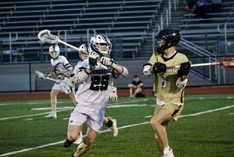
Studies have found that listening to music before a game can help build a positive type of adrenaline. Most athletes play music before a game without considering the science behind this common locker room activity. It can be a bonding experience for players to all get ready for a game together with their favorite hype songs. Pennridge High School graduate Evan Dickinson played ice hockey throughout his childhood and into his high school years. He also did media coverage for the teams. Dickinson is no stranger to pregame locker room music sessions, whether that be when he himself was playing or if he was helping cover the game on social media. “It sometimes soothes it but also gives the proper motivation to get yourself ready to play,” Dickinson said, referring to the mindset music can put you in before a big game. He primarily listened to rap and rock in the locker room before the game, which is a typical playlist for pregame. Music is also often associated with particular memories that the song was played in; Dickinson says he personally didn’t have one specific song he associated with his hockey days, but rather a few different songs. The effect music has on ice hockey players is different for everyone, but a common consensus is that it is used to get amped up before you step onto the ice.
On the other hand, a leisurely golf player, Kami Gant, shares her favored music preference while playing her less aggressive sport. While hockey relies on high-energy physicality, golf requires calm focus and mental control, creating a very different relationship with music. While golfing, she “prefers to listen to country.” Before she starts playing, music puts her in a positive mindset and good mood, so she is able to perform to the best of her abilities. According to the Western Gazette, music “regulates mood and tunes out distractions.” This is seen within both Evan and Kami’s experiences while playing their sport of choice, although the sports are on different sides of the spectrum.
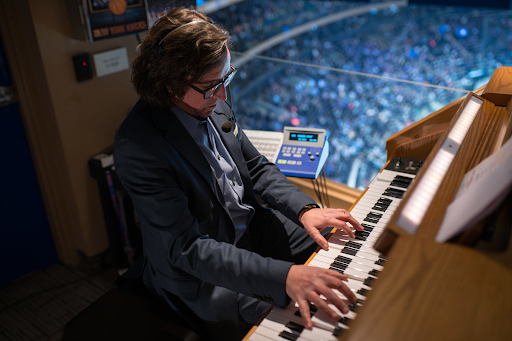
Beyond individual preferences, music has a broader cultural presence in hockey. The sport’s connection to music is visible not only in locker rooms but also in arenas, where entrance songs and in-game music enhance the fan experience. Iconic songs such as AC/DC’s “Thunderstruck,” “Shipping Up to Boston” by Dropkick Murphys, and “Lose Yourself” by Eminem have become staples of hockey arenas across North America. These songs are more than just background noise; they set the tone for the game, energize the players, and unite fans in the excitement of the moment.
Music also combines professional athletes and pop culture. Big-name artists like Ariana Grande, Drake, Carrie Underwood, and Justin Bieber have all found ways to combine their love of music and hockey. Ariana Grande, for instance, attended Florida Panthers games as a toddler and has gone to perform the national anthem at their home games. Drake, a former youth hockey player in Toronto, has been spotted in NHL locker rooms and performed at the NHL All-Star Game. Carrie Underwood, married to former NHL player Mike Fisher, has sung at Predators games, while Justin Bieber has skated with the Toronto Maple Leafs and competed in the NHL Celebrity Shootout. These interactions demonstrate that music and hockey inspire one another and create shared experiences between athletes, artists, and fans.
Music and ice hockey have gone hand in hand for years. Whether it be how players use it before or after a game, the music that is played in an arena in between shifts, or how famous artists also have a love for the sport. While it may not come to mind right away when you think of the sport or your favorite artist, they are far more connected than you might think.