With growing concerns about the effects of climate change, scientists are beginning to use robotics technology to help protect the ocean. This technology includes underwater drones, AI-powered cameras, and even robots that clean trash from the ocean. They are used to help researchers get to parts of the oceans that humans can’t reach and protect marine life.
Desmond Luginbuhl, a 10th-grade student at Pennridge, has been involved with Pennridge’s robotics team since last year. “Being able to work through problems and build something together as a team is what makes robotics very interesting to me,” he said. “Many types of robots can be used for good.” One such robot that is one of the most common types of robots used for ocean conservation is the autonomous underwater vehicle, or AUV for short. AUVs are used to travel through the ocean, collecting data for long periods of time without human intervention. Researchers equip them with sensors, cameras, and sonar equipment, and they are used to measure the temperature of the water, salinity, chemical composition, and sound underwater. They can also be used to create detailed maps of the seafloor and marine habitats. Christina Arnold, a mechanical engineer, says, “knowledge is power and learning more about the problem leads to the solution,” and using these AUVs gives us the ability to do exactly that.
AUVs are especially helpful when used to track changes in ocean ecosystems. They are used by scientists to help monitor coral reefs, study deep-sea communities, and observe the effects of climate change on marine life. Robots using AI technology have also been used in freshwater lakes to identify and track invasive species, including Eurasian watermilfoil and some types of seaweed.
Scientists also use remotely operated vehicles, or ROVs, in addition to AUVs. In contrast to AUVs, ROVs, which are also known as “eyes in the sea,” are controlled by humans remotely from the surface. Arnold says these advancements, “could be extremely helpful in helping the environment and learning more about the ocean.” They are able to dive deeper and stay underwater much longer than human divers, an extremely useful capability. ROVs often use high-definition cameras and robotic arms for collecting water samples, studying marine animals, assisting with coral restoration, and cleaning up oil spills or natural disasters.
There are also systems known as BRUVs, or Baited Remote Underwater Video systems, which scientists use to study sharks and their habitats. These camera systems, some of which are now 360-degree, allow researchers to observe sharks in their natural environment without disturbance by being lowered to the ocean floor with bait to draw in sharks. Scientists have also started using artificial intelligence to analyze unique patterns like spots, patches, and sharks’ dorsal fins to help identify individual sharks.
Aside from research, some companies have also started developing robots that are capable of cleaning and restoring ocean environments. One such robot is the CORail robot, which uses AI to find optimal spots on damaged reefs to transplant fragments of coral. The robot uses robotic arms to secure coral fragments to sections of degraded reefs, with much higher survival rates than manual placement. The robots also make large-scale restoration projects much more feasible.
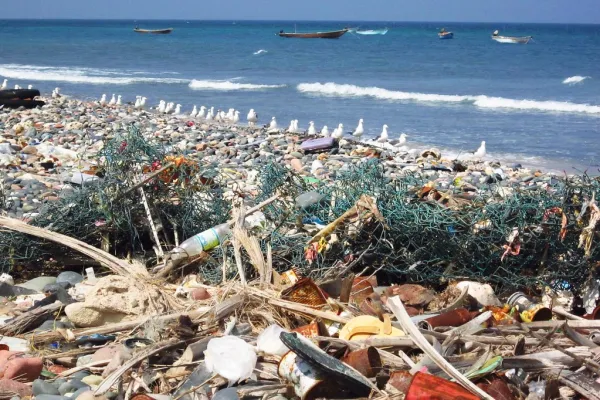
Robots likes ones developed by the company Clearbot are also being used to help remove pollution from oceans. These robots clear waterways and can clean up to 500 kg of water surface trash or one ton of thick vegetation per deployment. Clearbot robots were used to remove 42 tons of waste in a project at Umiam Lake in India. A solar and battery-powered robot called BEBOT has also been developed to sift and capture small debris from beach sand to a depth of four inches, without damaging flora and fauna or generating emissions. The robot can clean 3,000 square meters in an hour. “Being involved in this project could be very interesting, because I would be making the world a better place and could learn new things throughout,” Luginbuhl said.
In California, Whale Safe uses an acoustic buoy to listen for whales and transmit a warning to ships to slow down. It has already cut the number of whale collisions in the busy shipping lane leading to the port of Los Angeles. AI has also been used to automate aerial and infrared imagery to detect the presence of sea mammals. As well as preventing collisions, it can monitor the activities of whale populations over wide areas. Arnold says, “I think these [AI] advancements could be critical to helping endangered species,” and if we continue on the path we’re on, she’s absolutely right.
Finally, the underwater drone Hydrus, designed by Australian innovators Advanced Navigation, can dive to 3,000 meters below the ocean surface. Equipped with powerful lights and capable of operating entirely autonomously, it is used to locate and identify new marine species.
With advancing technology, robots are becoming an important part of ocean conservation. They give scientists better data and safer ways to explore the oceans, helping protect marine ecosystems for future generations. “I think that this could be a great use of robotics because it will be making the Earth cleaner and safer for not only wildlife but also future generations,” Luginbuhl said.
Sources:
https://www.nsf.gov/news/ai-powered-underwater-robots-revolutionize-marine
https://saveourseas.com/worldofsharks/podcast/the-next-frontier-how-ai-and-underwater-robots-can-help-us-better-understand-sharks
Marine Robots Are Revolutionizing Ocean Conservation (Here’s How)
https://www.clearbot.org/
https://www.weforum.org/stories/2023/07/robots-helping-protect-oceans/