Fashion has always been a hot topic, whether it’s what brand this celebrity is wearing or how much it costs to dress a certain way. The most noticeable aspect of fashion, though, is when it is used for political expression. This principle was the soul of the Homespun Movement of early colonial and revolutionary America.
The definition of homespun in the revolutionary period largely referred to a fabric or piece of clothing that was made in what was at the time known as British America. The piece did not necessarily have to be made by the wearer or their family, just made without British fabrics. This meant that many political leaders also engaged with the movement in a variety of ways. The most notable of these is George Washington using Mount Vernon to commodify domestic fabrics and wearing homespun clothes at many presidential events. Wool was designated as the fabric of the patriotic household once the United States fully separated itself from Britain. The Homespun Movement is best explained as a revolt against British laws surrounding importation and taxes. While the Townshend Acts and the Boston Tea Party are the textbook examples of tensions leading up to the American Revolution, there were prior fights. The Homespun Movement was one of them. In response to the Navigation Acts, laws that limited colonial trade to only British goods and services, groups of British colonials in America would boycott British fabrics in favor of homespun ones.
The Homespun movement was also an avenue for women to express their political views in what society viewed as an acceptable manner. Women participating in the boycotts would attend spinning parties that regularly excluded any British goods. These parties and the clothes that resulted from them would become a pathway for political expression among many women of the 18th and 19th centuries. More centralized groups may even issue messages to their local newspaper as the Edenton Ladies Patriotic Guild did with their message “…it is a duty which we owe…to do everything as far as lies in our power to testify our sincere adherence to the same; and we do therefore accordingly subscribe this paper, as a witness of our fixed intention and solemn determination to do so.” This message solidified and encouraged others to join their resistance to consuming British goods. Women who owned shops would also agree to sign non-importation agreements organized by the community. When asked about the efficacy of modern boycotts in comparison, Pennridge High School Fashion, Marketing, and Design teacher Rachel Hoffman said “It depends. Efficacy fell as far as boycotts go, not as strong as it was back then. Recently, it’s lost power because people are looking for cheap and easy”. This limited expression of political positioning would continue to influence women’s fashions throughout and following the Revolutionary War.
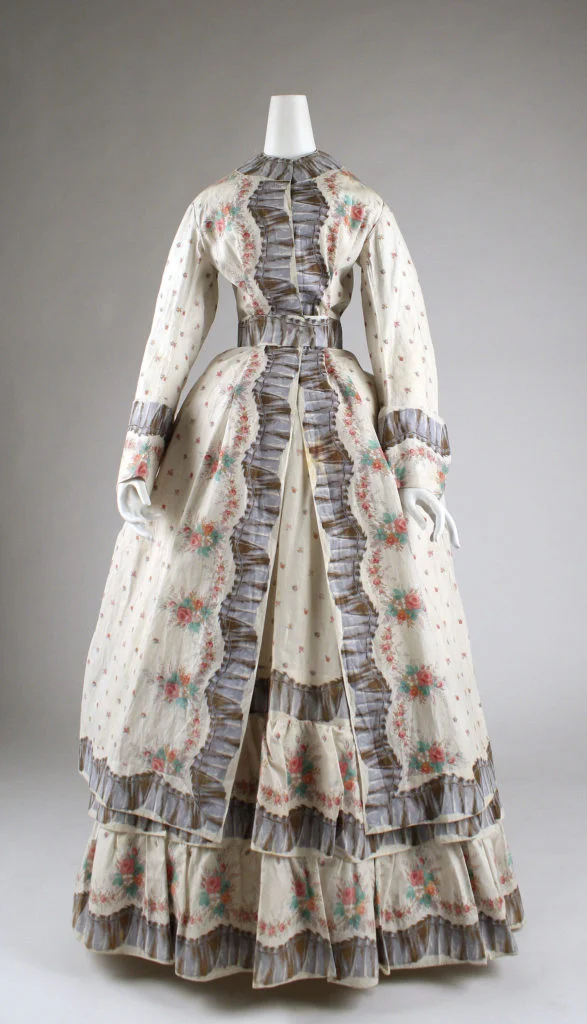
Then, a brocade of a certain color could represent your support for the Federalist Party. Today, wearing clothes that you thrifted, altered, or repaired yourself is a path of self-expression that many members of Generation Z take part in. Fashion as a method of expression has never been doubted, but its presence throughout history is undeniable. Even in the modern era, when India was fully separating itself from British control, it formed the Swadeshi movement, a movement that resisted the consumption of British goods following their independence as a country.
Sources
https://blogs.loc.gov/law/2022/10/the-hands-that-spun-the-revolution/
https://www.hamilton.edu/news/story/clothing-gandhis-nation-homespun-and-modern-india