For over 100 years, climate change and global warming have been carefully studied. As years pass, more information about climate change emerges. Climate change and global warming are impacting much more than just the temperature you feel when you step outside. It’s affecting the ecosystems, the weather, and the animals that roam our planet. One species in particular is very well known for the effect climate change and global warming have on it. The polar bear is a renowned mammal that inhabits Antarctica, often found roaming the polar ice. However, with the rising temperatures, polar bears may not have many years left.
Global warming and climate change are often used interchangeably, despite being two distinct concepts. What they do have in common is that they both contribute to the increase in severe weather and its impact on polar bears. According to NASA, “climate change is a long-term change in the average weather patterns that have come to define Earth’s local, regional and global climates.” On the other hand, global warming is the general heating of Earth’s surface. Global warming naturally occurs, but human impacts have sped up the process significantly. Our warming Earth is one of the reasons the polar ice is melting so fast. According to the United States Geological Survey (USGS), “the Arctic is warming at twice the rate of the rest of the world, causing sea ice to shrink by 13% per decade.” As temperatures rise, the risk for polar bears becomes even more severe.
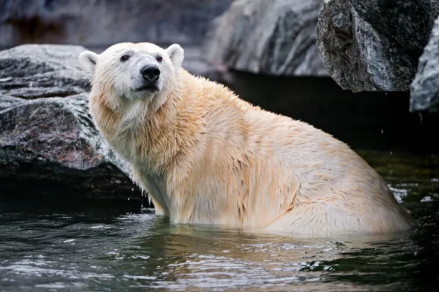
The scientific name, Ursus maritimus, belongs to the polar bear. They are the largest extant species of bear and land carnivore by body mass, and males, also called boars, usually weigh 660-1,760 pounds. Their height ranges from 5.9 feet to 8 feet. Females, referred to as sows, have one of the lowest reproduction rates of any mammal, which is about five litters per lifetime. The cubs stay with their parents for two to three years, only weighing a pound or two when they’re born. Ringed seals and bearded seals are their primary food source, sometimes incorporating arctic foxes in their diet. The species is closely related to the brown bear, and they can interbreed. Dishearteningly, a once thriving species is now threatened globally. The Alaskan and Canadian Arctic are primarily at risk, with only 900 polar bears estimated to remain in both regions combined. Catch this cold-hearted fact: they’ve experienced a 50% decrease!
According to the World Wildlife Fund, “the Arctic’s average weather has risen at a rate of three times the global average.” But why is this happening? There are numerous underlying causes. For instance, arctic glaciers and ice caps only represent 25% of the world’s land ice, but the water from melted glaciers accounts for 35% of the sea level rise globally. There is still hope for these resilient creatures, but it relies on the temperatures. If the temperature increase stays at 34.7 degrees Fahrenheit (1.5 degrees Celsius), some summer sea ice might remain, but if it goes over, it will be gone in decades. The melting permafrost isn’t helping the issue, which is meant to serve as a crucial carbon dioxide reservoir, stabilize terrain, avert erosion, and help migrating wildlife. As it thaws, greenhouse gases are released, leading to the loss of sea ice.
Ice is crucial for the polar bear’s survival, providing transportation, food, and protection. So, when the polar ice starts to melt, their entire sense of security is tested. Polar bears use the ice for travel. It’s a source for them to cover far distances without having to swim for very long. In a world where the Arctic has no ice, polar bears are forced to swim everywhere. This is not ideal for the polar bear, as it causes fatigue and potential malnutrition. Polar ice is a huge component of the Arctic food web for polar bears and is utilized for hunting. Without the ice, the polar bear’s food becomes scarce. Polar bears may lose their ability to reproduce as well. The lack of reproduction for the species significantly impacts whether or not the species can avoid extinction. “A majority of climate change is impacting species that are in northern and southern biomes and aquatic, especially with habitat loss,” Richard Hampson, an advanced placement environmental science teacher at Pennridge High School, said. Climate change continues to threaten polar bears and numerous species around the globe.
Yes, this is a lot to take in, but it’s more important to understand that we can take action. There are numerous ways to help our furry friends, and it starts with their home. The main factor is burning fossil fuels, but there are solutions. Find ways to replace them with clean energy sources like solar and wind. It might not seem simple, but all it takes is researching renewable energy sources available to you, and if possible, getting involved in projects. It can mean promoting clean transportation and reducing the number of vehicles, so car sharing helps. For those advocating for climate change, it should be a consideration when voting in elections. As stated by scientist Katharine Hayhoe, “we need all options on the table and all hands on deck.”