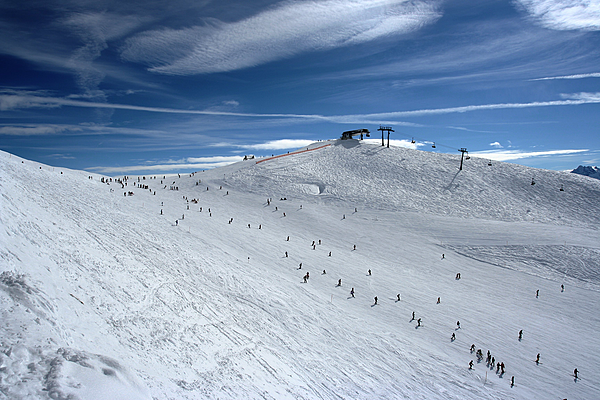
For many generations, winters in Pennsylvania meant early snowfalls, long stretches of cold, and blizzards that shut down schools for days. However, across the Northeast, this familiar version of wintertime is disappearing. Scientists warn that this season that sustains the snow is rapidly warming and shortening. Research from the Appalachian Mountain Club shows that since 1917, the Northeast has lost nearly three weeks of winter, including 19 fewer days with snow on the ground and over 20 fewer days below freezing. In states like Massachusetts, Rhode Island, and Connecticut, those losses stretch to nearly a full month.
Still, snow is falling, but it doesn’t stay. Temperatures swing from warm to cold in what researchers have been calling “weather whiplash,” causing snow to melt faster and arrive later in the season. A Dartmouth study backs this up, warning that the Northeast is slowly nearing a “snow-loss cliff” – a tipping point where winter temps become too warm for any meaningful spring snowpack. If this does happen, much of the Northeast regions could see almost snow-free late winters by the end of the century. This decline matters far beyond scenery. Snowpack feeds major watersheds like the Delaware, Susquehanna, and Hudson. When it disappears, so does a major source of freshwater, threatening the ecosystem and drinking water.
Pennsylvania’s recent winters reflect this shift. According to meteorological data, the past three years brought below-average snowfall, especially in the Pittsburgh area. Across two winters, Pittsburgh saw only 33 inches of snow, far below its average of 41 per winter. AP Environmental Science teacher, Richard Hampson explains that what many people call “global warming” is better understood as climate change, because warming disrupts weather patterns rather than just raising temperatures everywhere. With less snowpack, ecosystems struggle. Many wildlife species rely on stable snow cover for insulation or survival cycles. Municipal water supplies built around predictable snowmelt are also strained. Hampsom says solutions exist: “Carbon sequestration. Taking carbon out of the atmosphere is key to slowing the decline.”
Yet, not everyone sees the change as clearly. Mike Capo, who has lived in Pennsylvania his entire life, remembers the massive Blizzard of 1996 that dropped nearly three feet of snow on the region. But overall, he doesn’t believe that winter has changed dramatically. “I would say temperatures have remained cold,” he says. “We still have very frigid temps. Less snow is due to the lack of precipitation in the air. Every year is different.” His experience reflects a common feeling among long-term residents: even if winters look different on paper, memories of big storms loom larger than subtle temperature changes.
Scientists may measure winter in loss in degrees and snowpack depth, but communities feel its effects through disrupted traditions, again ecosystems, and even economic shifts. As temperatures creep upward and snowpack thins, the Northeast stands at a turning point. What we do now – locally and globally – will determine whether future generations inherit the winter we once knew or a new season altogether.