Stray cats are a common sight in many communities worldwide. These cats live without permanent homes and often survive on the streets, relying on their instincts and the kindness of strangers. Understanding the challenges faced by stray cats is important for fostering compassion and finding effective ways to support their well-being.
Stray cats are different from feral cats, though many use the terms interchangeably. A stray cat is a cat that lived indoors and was socialized to people at some point in their life, but has left or lost their home, was abandoned, and no longer has regular human contact. Eleasha, the director of animal behavior at the Bucks County SPCA, stated what they look for in a stray. “In a socialized cat, we look for things like if the cat seeks human contact, responds to voices, uses a litter box, or shows curiosity instead of fear.” A feral cat is an unsocialized outdoor cat who has either never had any physical contact with humans or human contact has diminished over enough time that it is no longer accustomed to it. The difference between strays and feral cats is significant, and strays are often what most people see in cities. Stray cats are more likely to approach people in the streets as they are more accustomed to people.
Life for stray cats can be difficult. Without a consistent source of food, shelter, and medical care, these cats face many dangers. They are vulnerable to harsh weather conditions, diseases, injuries, and conflicts with other animals. Strays often scavenge for food in garbage bins or rely on people who occasionally feed them. Because stray cats lack regular veterinary care, they are at higher risk of spreading and contracting illnesses such as feline leukemia virus and feline immunodeficiency virus. These illnesses are very contagious and can cause death in many cats.
Despite these challenges, many stray cats are incredibly resilient. They have adapted to survive in urban and rural environments, often finding creative ways to stay safe and fed. Some communities have “trap, neuter, release” (TNR) programs to help control stray and feral cat populations. These programs involve trapping the cats, spaying or neutering them to prevent overpopulation, and then returning them to their original location. TNR helps reduce the number of unwanted kittens and improves the health of the cat population over time.
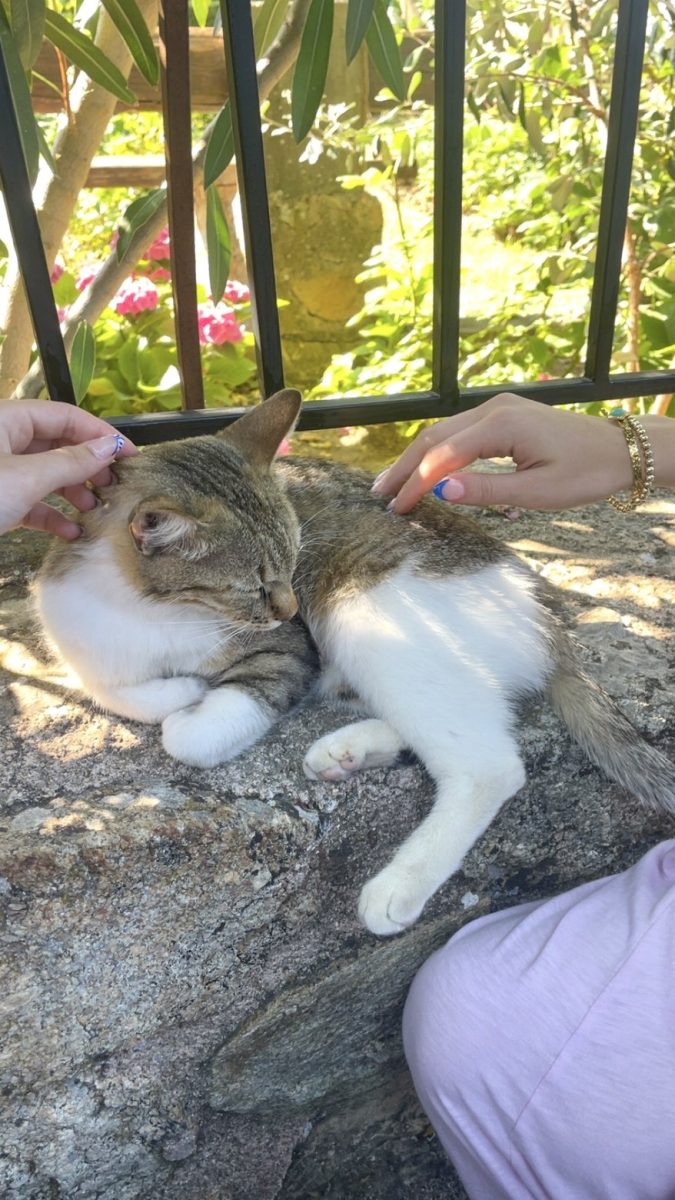
Greece is famous for its large populations of stray cats, especially in cities like Athens and on many of its islands. These cats are often seen lounging in the sun near ancient ruins or wandering through city streets. Shea Lightcap recalled her trip to Greece over the summer and thought about the strays she saw when there. “It was upsetting to see the conditions they lived in,“ she said, “but it was nice to see how the locals cared for them and fed them.” In ancient times, cats were considered protectors and symbols of good fortune. These beliefs carry on to today, where locals continue to care for strays by feeding them and giving them water. Many non-profit organizations in Greece help support stray cats. Nine Lives Greece helps strays by informing tourists and others about the safety and health of the cats.
In summary, stray cats are a visible part of many neighborhoods, and their presence highlights the need for humane and effective animal welfare practices. By understanding their struggles and supporting community efforts like TNR, we can help improve the lives of stray cats and help promote a healthier coexistence between humans and animals.